Home > Vintages and Regions > Bordeaux > Bordeaux 2008 > The Médoc, Part 1

Bordeaux 2008: The Médoc, Part 1

My St Estèphe tastings began with Montrose and then Cos d'Estournel in quick succession on Tuesday morning, with other wines picked up at other châteaux. Montrose was a little hard and less giving than Cos, the former showing lots of backward structure with less flesh, whereas the latter was richly endowed with a flattering, creamy texture, and no doubt a yield of just 27 hl/ha had something to do with that. Do these findings merely reflect stylistic differences between the estates, the difference between Jean Delmas, once of Haut-Brion, and Jean-Guillaume Prats, or is at a reliable mark of quality and ageing potential? I do not know for sure; what I do know is that on the day I much preferred the Cos d'Estournel. This will be music to the ears of Prats, who has spent an undisclosed but no doubt gigantic sum on his cellar refurbishment, complete with dozens of new laser-welded steel fermentation vats, a cooling tunnel for reducing the fruit temperature prior to fermentation, and four gigantic lifts for lower and raising entire vats of wine, so that vat-to-vat transfer can be achieved entirely by gravity. These new developments will not only aid quality at Cos but will no doubt have other effects; financed with a loan repayable over twelve years, I am sure the price of the wine will reflect this investment for many years to come.

As for the remaining St Estèphe properties after the two second growths, few really impressed. My favourite out of all was Les Ormes de Pez, which showed very nicely even up against the likes of Lafon-Rochet. After visiting Cos and Montrose there came Latour, Lafite and Pichon-Lalande in fairly quick succession. Each was of fine quality, the majestic Latour a certain candidate for unfinished barrel sample of the vintage, whereas Lafite was more seductive, more wily. Pichon was also divine, and just missed out on a placement in my favourite dozen. Looking beyond at the rest of the appellation, there were some successes, most notably at Pontet Canet and Pichon-Baron, although Duhart-Milon is perhaps worthy of specific mention. In St Julien, meanwhile, there was much more consistency of quality. The wines on the whole have a vibrant, crystalline style of fruit and are led without doubt by Léoville-Las-Cases, where we stopped off between Latour and Pichon-Lalande, although both other Léovilles also showed very nicely, as indeed did the other cru classé wines, from Beychevelle through to Talbot.
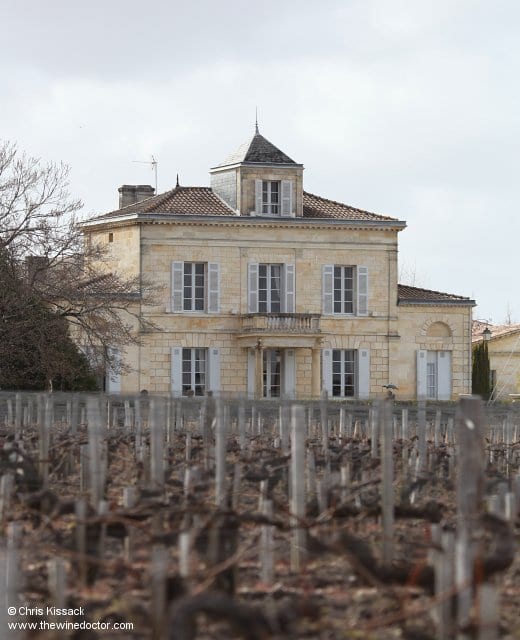
Although the left bank performance this vintage is patchy it is certainly better than 2007, and there are some great wines here. St Julien is the strongest commune when considered as a whole, although the greatest wines per se would appear to be the Pauillac first growths. This may reflect the success of Cabernet Sauvignon which, being harvested later than the left bank Merlots, was also to take advantage of the late September and October weather to ripen. Having said that where I have comparable data for the 2007 and 2008 vintages the wines aren't particularly richer in this variety (e.g.. Lafite has 83% versus 84% respectively, Latour 94% versus 91%) but there is a huge difference in quality between the two vintages.

Bordeaux 2008Much of the gossip (and there is usually plenty of that) in Bordeaux during the primeurs week concerned release prices, and it is impossible to look at these wines without considering that. In general the chatter seemed to suggest the first growths would come out with a release price somewhere between 90 and 120 Euros, per bottle. What this translates into in distant markets very much depends on subsequent mark-ups and exchange rates, but such a release price would certainly be a dramatic reduction on recent previous vintages. Such chin-wagging does seem to have some merit; the anticipated release of Angelus at a price equivalent to that for 2004 within a week of the tastings was widely discussed across the region. There wasn't a soul queuing for the flight home at Mérignac who wasn't aware of this rumour, which has since proved to be correct. Will the rumblings concerning first growth release prices also be true. I suspect we shall find out very soon.

Below are my notes on the wines of St Estèphe, Pauillac & St Julien in the 2008 vintage. In part 2 of my Médoc notes I will be looking at the wines of Margaux, the Haut-Médoc and Médoc, where successes similar to those that can be identified in St Julien and Pauillac are few and far-between indeed. (10/4/09)

St Estèphe, Pauillac & St Julien 2008: Tasting Notes

Tasted in Bordeaux in April 2009. Click to locate stockists.

St Estèphe

Chateau Cos d'Estournel 2008: This is 85% Cabernet Sauvignon, 13% Merlot and 2% Cabernet Franc, and comprises 78% of the estate's production. Harvest ran from September 29th to October 13th, average yield just 27 hl/ha. Good firm fruit on the nose, fresh but moving towards dark fruit in style. Showing less oak than Pagodes, or La Goulée. Tightly formed on the palate, although it is at least expressive. A nice, ripe grip in the background, a little silky but with texture and some weight. Nicely coated, elegant but with a little creaminess. Dense finish. Lots of potential here. 17-18+/20

Les Pagodes de Cos 2008: The second wine of Cos d'Estournel is 45% Cabernet Sauvignon, 53% Merlot and 2% Petit Verdot, and comprises 22% of the estate's production. Harvest ran from September 29th to October 13th, average yield just 27 hl/ha. Flattering, with toasty oak, with dark cherry character. Expressive. Fresh but textured, fairly generous, firmly structured though. Nicely composed, good substance, ripe tannins, some firm oak as well. Slightly chewy finish, well structured, with a more appealing character than that other famous second wine of St Estèphe, La Dame de Montrose. 15-16+/20

Chateau Cos Labory 2008: Dark fruit on the nose here, ripe, a little roasted even. The palate is dense, slightly oily even, a little vegetal, with rather leafy fruit. Although it is all backed up by lots of acidity and dense tannin, the latter with a huge, chewy character. Very extracted. 14.5-15.5+/20

Chateau Haut-Beauséjour 2008: This is 50% Cabernet Sauvignon, with 40% Merlot, 5% Cabernet Franc and 5% Malbec. The yield was 38 hl/ha. The nose is carrying a lot of sulphur at the moment - not something I found marking many wines during the primeurs. The same characteristic marked the palate, which had a generous and approachable style, with a lot of substance and texture. nevertheless it is really difficult to say anything concrete about this wine. 15-16+?/20

Chateau Lafon-Rochet 2008: A meaty and rather farmyardy nose here, with a little vegetal edge. Fairly big and structured on the palate, with good texture. The fruit character mirrors that presented on the nose. Not a strong effort here. 14.5-15.5+/20

Chateau Montrose 2008: This is 65% Cabernet Sauvignon, 30% Merlot, 4% Cabernet Franc and 1% Petit Verdot, and comprises 60% of the estate's production. Harvest ran from September 29th to October 15th, average yield 44 hl/ha. The character here is very reticent, with withdrawn berry fruit on the nose. The palate doesn't have a great impact, but it has freshness, and a lot of structure. big, grippy tannins, a lot of extract, but no sweetness. If you need fruit, generosity or texture look elsewhere. 16-17+/20

La Dame de Montrose 2008: The second wine of Montrose is 44% Cabernet Sauvignon and 56% Merlot, and comprises 28% of the estate's production. Harvest ran from September 29th to October 15th, average yield 44 hl/ha. Reticent fruit here, like the grand vin. It is ripe, with red fruits. The palate is soft, open and rather loose knit, with a diffuse midpalate. Good grip underneath though, although with quiet fruit, and quite a hard grip on the finish. A little short on vigour. 14.5-15.5+/20

Chateau Les Ormes de Pez 2008: Fine and fresh character on the nose, dense but fresh and nicely expressed. The palate is similarly dense and stylish, creamy, coating the mouth with dark summer fruits. Underneath, a good firm tannic backbone. Good acids too. A big, substantial but very successful wine. A good effort. 16-17+/20

Chateau de Pez 2008: This is 45% Cabernet Sauvignon, 50% Merlot and 5% Petit Verdot. The yield was 38 hl/ha, and 65% went into the grand vin. This has dark and clean fruit on the nose, with a fresh, stony, somewhat perfumed character. There is a nicely supple texture on the palate, well integrated structure, with a little richness. Good acids, and midpalate texture and tannin. Very approachable and easy to taste. Shows some promise. 15.5-16.5+/20

Chateau Phélan-Ségur 2008: A big, feral, meaty style here, not showing much freshness. A big and bold palate, textured and oily, overall rather foursquare. There is good fruit character though, although they have a rather sweet, cola-tinged edge. Certainly an interesting mouthful! 15-16+/20

Chateau Tronquoy-Lalande 2008: This is 37% Cabernet Sauvignon, 50% Merlot, and 13% Petit Verdot, and comprises 62% of the estate's production. Harvest ran from September 29th to October 15th, average yield 53 hl/ha. A touch of smoke on the nose here, and overall this has a little more perfume and generous fruit than the Sainte Anne. Softer palate, more textured, rounder, but with a firm tannic core. Ripe berry character. Certainly interesting. 14.5-15.5+/20

Chateau Tronquoy de Sainte Anne 2008: This is 59% Cabernet Sauvignon and 41% Merlot, and comprises 38% of the estate's production. Harvest ran from September 29th to October 15th, average yield 53 hl/ha. Nice, cool, stony fruit on the nose, although it then shows notes of over-ripe raspberry, and stewed characteristics. Lean on the palate, a fairly rustic midpalate, with a coarse spice to it. Hard finish. A bold, tannic, rather foursquare wine. 13-14+/20

Pauillac

Chateau d'Armailhac 2008: A fairly dark and concentrated nose, with a wealth of dense, crunchy, crystalline black fruits. Lovely fruit expression on the palate, redolent of raspberries and cream. Broad and textured, supple, refined but fresh. An impressive wine dripping in style. Like its stablemate Clerc-Milon, this may warrant a higher score in future. 16.5-17.5 +/20

Chateau Batailley 2008: Dark, a little perfumed, and with charcoaly notes. An attractive palate, fresh and appealing, with fresh acids and firm ripe tannins. The fruit has nice aromatics, with a slightly chewy character. This isn't as well defined as some, nor does it have the most vigour. Still good though. 16-17+/20

Chateau Clerc-Milon 2008: Dark and aromatic, pure, with quite concentrated fruit. An attractively open style on the palate, broad, gently fleshy, with nicely covered tannins. Clean, perhaps a touch diffuse, but with good character. This may come together in time and may well warrant a higher score. 16-17+/20

Chateau Croizet-Bages 2008: Rather withdrawn fruit here, but it has a nice freshness. The palate starts in a bright fashion, with a firmer midpalate, bright and textured. A slightly oily texture, with slightly harder tannins than some wines. There isn't the fruit sweetness I would like to provide balance in view of that. Good acidity though. Certainly a step up from the 2007. 15-16+/20

Chateau Duhart-Milon 2008: The harvest here did not begin until October 1st, finishing on October 15th, and the wine is 73% Cabernet Sauvignon and 27% Merlot. This has dense, reserved, linear fruit character on the nose, with good style. A note of perfume too. The palate is fine, showing stony, lean fruit but a nice weight to the middle. Lovely ripe tannins, substance and finesse. Fine extract and a good finish. Certain potential here. 17-18+/20

Chateau Grand-Puy-Ducasse 2008: Black fruit on the nose here, a touch of rich cherry, but it also seems a little vegetal too? A very firm composition on the palate, with lots of substance and brawny character. Broad but raw, showing a lot of acid and some background tannin. It all seems very loose-knit. A lesser wine this year. 14.5-15.5+/20

Chateau Haut-Bages-Libéral 2008: A vibrant and open nose here, with cherry, raspberry and cream. Fresh and vibrant, well defined, but also polished and rounded. A nice delineating seam of acidity and well coated tannins, with a rich substance, makes this a success. Very good potential here indeed. 16.5-17.5+/20

Chateau Lafite-Rothschild 2008: In this vintage the blend is 83% Cabernet Sauvignon, with 13% Merlot and 4% Cabernet Franc. Harvest began on October 2nd, finishing October 16th. The wine shown is the final blend, including press wine. There is perfumed, dark, crunchy and slightly mineral fruit on the nose, with a little overlay of honeyed oak. The palate shows a lot of silky structure at the start, and there is good flesh through the middle. Nice substance, with a tangible meaty extract to it. Aromatic and stylish, with a beautiful, warm, open, roasted and accessible character, and yet a spicy density and bags of potential. A seductive wine indeed (more so than Latour), with great harmony of substance. 18-19+/20

Carruades de Lafite 2008: The second wine of Lafite-Rothschild which is in this vintage 45% Merlot, 51% Cabernet Sauvignon, 1% Cabernet Franc and 3% Petit Verdot. Harvest dates as for the grand vin. A good smoky nose here, with vibrant fruit expression. Reserve but with a good weight on the palate, ripe tannins, flesh and substance. Like the first wine very approachable, but here with a core of cottony tannin. Dense fruit. An impressive second wine. 16.5-17.5+/20

Chateau Latour 2008: A blend of 94% Cabernet Sauvignon and 5% Merlot, with a few spoonfuls of Cabernet Franc (0.75%) and Petit Verdot (0.25%). The harvest ran from September 29th to October 29th . Reserved but clearly very rich in character on the nose, with tight, compact, crunchy red cherry fruit. This is immediately looking far superior to the 2007. A beautiful presence on the palate, very polished, but stony and structured. There is a fine core of tannin, with a powerful, grippy, forthright midpalate. The fruit is spicy, vibrant and vigorous, with a very linear style. This is intense and classic Latour. Compared with Lafite, it is more linear, silky on the surface but an iron fist hides within. A true vin de garde, potentially great, and probably my wine of the vintage. 18.5-19.5+/20

Les Forts de Latour 2008: The second wine of Latour, which in the 2008 vintage is 66.5% Cabernet Sauvignon and 31.5% Merlot. Harvest dates as for the grand vin. This has dense, meaty fruit on the nose, and is less open than the third-level Pauillac that follows. An austere palate, but fairly good texture in the middle, but certainly tight, backward and tannic. Fresh fruit, stony at the end. Balanced, and it has good length. 16-17+/20

Pauillac de Chateau Latour 2008: The third wine of Latour, comprising 45% Cabernet Sauvignon and 55% Merlot, marketed as a generic Pauillac. Harvest dates as for the grand vin. Reserved, with firm plum fruit on the nose. A nice character on the palate, fairly lean at the start, but developing more middle in the mouth. Lots of overt structure though, but it does have texture to compensate. Very classically styled; this has potential and may offer good value. 15-16+/20

Chateau Lynch-Bages 2008: Sweet, crystalline, cherry fruit with a dark character and also a little toast. The palate is rounded, seamless but firm; there is a little not of oiliness to it too. Lots of meat here, good fruit, not particularly vibrant but certainly dense. Polished, but not as bright or vigorous as some. 15.5-16.5+/20

Chateau Lynch-Moussas 2008: Darker fruit on the nose, with notes of black olive. This is followed by a lovely dense texture on entry, with good zippy fruit. A nice weight in the middle, broad and slightly loose knit, but fleshy, with substance and tannin at its heart. There is potential here. 15.5-16.5+/20

Chateau Pichon-Baron 2008: Dark, substantial, slightly oaky fruit. Lots of substance on the palate here, with good depth and extract. Polished, with a ripe tannic core and rather firm acidity. This wine has a fine composition, weighty but elegant. Fine potential. 17-18+/20

Chateau Pichon-Lalande 2008: Harvest here began on September 29th, and the wine is 63% Cabernet Sauvignon, 29% Merlot, 3% Cabernet Franc and 5% Petit Verdot. Dense and perfumed aromas here, evocative, suggestive of dark, almost crystalline cherry fruit. Pure and elegant to start, linear and softly perfumed, clearly very primary but will substance and an elegant, supple composition. An impressive wine with good extract and balance. 17.5-18.5+/20

Reserve de la Comtesse 2008: The second wine of Pichon-Lalande, this is 33% Cabernet Sauvignon, 50% Merlot, 12% Cabernet Franc and 5% Petit Verdot. Nicely perfumed, this is elegant and open, with warm dark fruit and a little smoke. Cool and reserved on the palate, with good backbone. Rounded, polished, slightly reserved texture, with good, crisp fruit character. Midpalate grip too, and a nice vibrancy. A good second wine. 16-17+/20

Chateau Pontet-Canet 2008: Decanted before pouring, which is the norm for Pontet-Canet at these tastings. Dark and clearly concentrated, with a delightful perfume, harmonious and floral in character. The palate, however, is dense and withdrawn, tannic and firm. The structure is compact and tight, with a dominating wealth of ripe tannin. This has huge structure, but it is ripe, and it has the acidity to cope, and the fruit too I think. What a big finish. Massive potential here, but I hope the fruit outlives the tannins. 17.5-18.5+/20

St Julien

Chateau Beychevelle 2008: A lovely nose, aromatic and fresh, and just a little toasty. Fresh on the palate too, with a fine, cool, purity of fruit. Stylish, minerally and textured, with fairly dense but crisp fruit, all well balanced. Gently supple, with lovely underlying structure. A real success here. 17-18+/20

Chateau Branaire-Ducru 2008: Highly perfumed and aromatic fruit, almost exotic in character, with plenty of sweet cherry. The palate is pure and supple, glossy but gently mineral on the midpalate. Very nicely balanced, with good, ripe, nicely polished tannins. It finished very nicely too. This is really exciting wine. 17-18+/20

Chateau Gruaud-Larose 2008: This has a paler hue than the other wines of this commune, and the nose is more meaty and less fresh, with some chalky red fruits. It has a nice elegant entry though, wit supple red fruit, although it is leaner and harder than the other wines. Pretty but slightly chewy tannins; this wine is certainly rowing in a different stream to the rest of the commune in this vintage! 15.5-16.5+/20

Chateau Lagrange 2008: Dense, sweet, with concentrated ripe fruit. The palate has a very ripe and detached style, mineral and fresh. Fairly bright and lively, with good vivacity. Less supple than some, but with good substance, nice acidity and appropriate tannins. Very good potential. 16.5-17.5+/20

Chateau Langoa-Barton 2008: Sweet fruit on the nose, dense and aromatic. Bright, vivacious, supple, but largely fresh, crisp and mineral. This is certainly a style seen in this appellation this year. A nice gentle substance, elegant, with a fine backbone of tannins and acidity. Good finish too. Fine potential. 17-18+/20

Chateau Léoville-Barton 2008: A different style to Langoa, with darker fruit, and more extraction I would think. although it maintains a welcome freshness. Textured and dense on the palate, although with some suppleness, but there is also a seam of ripe, well matched tannins. Forceful yet harmonious, with a big rounded finish dominated by tannin. As usual this wine is more backward than many of its peers in this early stage of its life, but the potential and raw substance is all here. 17.5-18.5+/20

Chateau Léoville-Las-Cases 2008: The harvest here was from October 6th to the 18th, and the wine is 78% Cabernet Sauvignon, 12% Cabernet Franc and 12% Merlot. The ultimate yield for the estate was 37.9 hl/ha. Wow - what a captivating nose! Intense black cherry fruit, minerally and pure, crunchy but rich, layered with cream and vanilla. Pure, but as the nose suggests stunningly rich and intense, and broad. Elegant tannins, firm yet silkily textured, really stylish yet with real depth and concentration. A great tannic core which is only really evident at the finish. Great length. A fabulous effort. 18.5-19.5+/20

Clos de Marquis 2008: The second wine of Léoville-Las-Cases is 55% Cabernet Sauvignon, 41% Merlot, 3% Cabernet Franc and 1% Petit Verdot, harvest dates and yield as above. An attractive nose, with dense and dark fruits, and overall a good character. Weighty, supple fruit on the palate, elegant but with substance. Ripe and fine tannin. Very approachable, well judged, with firm tannins at the finish. This is really attractive. 16.5-17.5+/20

Chateau Léoville-Poyferré 2008: Dense fruit here, more meaty in style than the Barton equivalent. Fresh and supple on the palate, creamy, with black cherry character. Dense and rich, but with good tannin. Well balanced acids, substantial, very concentrated, with a meaty richness. It shows but fruit than the Barton, but it has the same backward structure, and lots of potential. 17.5-18.5+/20

Chateau Saint-Pierre 2008: Fresh, vibrant, sweet and dense fruit, and a lovely, sweet, creamy palate. A good peppery backbone of tannin, with a very firm grip but a fine and supple texture. There is a lovely meaty richness to it, good fruit complexity, and a nice flesh as well. An impressive effort from this chateau; this should be very good indeed. 17-18+/20

Chateau Talbot 2008: Sweet cherry fruit on the nose, clean but dark and spicy in character. Supple, with fine-grained tannins, with a fine substance and fresh acidity. Vigorous, with fresh acidity, perhaps not quite the same vibrancy as some wines tasted here, but still a very, very good effort from this chateau. Impressive. 17-18+/20