Home > Producer Profiles > Loire Profiles > Chateau de Fesles
Chateau de Fesles
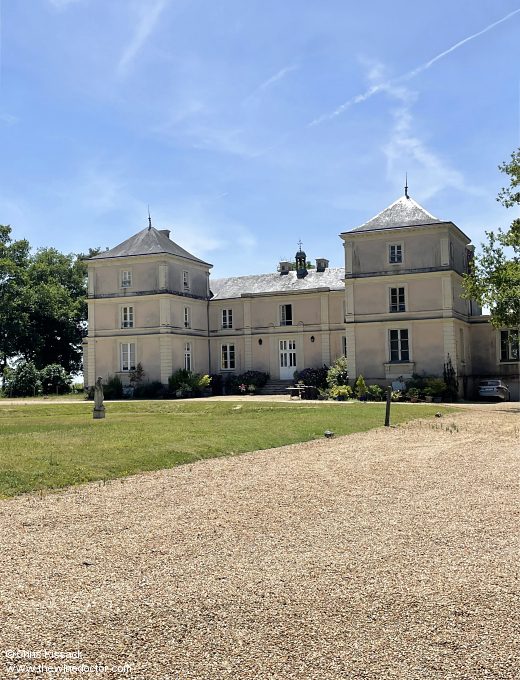
Chateau de Fesles is situated in the district of Thouarcé in the Anjou region, very close to the village of Bonnezeaux itself. The origins of the chateau can be traced back as far as 1070, when the original buildings were constructed. The current buildings in fact date from the 19th century, although the chateau has been remodelled by its various owners over the centuries. The most recent changes have been in 1991, whilst under the control of Gaston Lenôtre, a celebrated pastry chef.
More important than the historic buildings, however, are the wines. Bonnezeaux was named for the quality of its mineral water, which springs in abundance from the iron-rich soils, but it is now recognised as one of the Coteaux du Layon's two crus. Chateau de Fesles was once hailed as the finest estate of Bonnezeaux, but by the mid 1990s the property's reputation was a shadow of its former self. I suspect this was due to a combination of Lenôtre's inexperience with regard to sweet wine production, combined with a sequence of less than adequate vintages, starting with 1991. In the late 1990s the estate was then purchased by Bernard Germain, a Bordeaux négociant who was establishing himself anew in the Loire, and quality began to take off again. One of Germain's more difficult decisions was to stop production of the super-cuvée La Chapelle in order to concentrate on a single Bonnezeaux bottling - doubtless just one of many decisions which has resulted in an upturn in the estate's fortunes.

Sadly it would seem that Germain overstretched himself somewhat - he had purchased a number of other estates as well - and in June 2008 Fesles was sold, this time to the négociant group Grands Chais de France. Only time will tell what effect this new change of hands will have on the quality of the wines.
The vineyard itself covers 33 hectares, of which only 14 are classified as AC Bonnezeaux. These 14 hectares lie on the slope of the hill, immediately around the chateau, and are planted with Chenin Blanc. The soil here is stony, Silurian soil, covered by a mixture of decomposed shale as well as blue and red clay. The topsoil is shallow and also quite rocky. The nearby Layon frequently gives rise to morning mists, especially in autumn, encouraging the development of botrytis. As well as Chenin Blanc on the slopes, on the plateau both Cabernet Franc and Cabernet Sauvignon are planted for an Anjou Rouge, and some Grolleau and Gamay which are gainfully employed in the production of an Anjou Rosé. (23/8/02, updated 22/8/06, 11/8/09)
Contact details:
Address: Bernard Germain, 49380 Thouarcé
Telephone: +33 (0) 2 41 68 94 00
Fax: +33 (0) 2 41 68 94 01
Internet: www.fesles.com
Chateau de Fesles - Tasting Notes
Chateau de Fesles Anjou Blanc 2007: Rather gentle and honeyed fruit on the
nose, with a gently plump style following on the palate. Diffuse, straw and
paper character, underpinned by decent acidity. Clean, neutral, a little more
hearty and rustic towards the finish. A decent wine. From a
Charles Sydney tasting. 13.4-14.5/20
(February 2009)
![]()
Chateau de Fesles Anjou Blanc La Chapelle 2007: This wine has a much more
appealing character on the nose, minerally and straw-like, with a little touch
of honey. Better concentration, supple weight, good acidity bringing up the
rear. Overall a nice character and a pretty style. Good. From a
Charles Sydney tasting. 15.5-16.5/20
(February 2009)
![]()
Chateau de Fesles Bonnezeaux 2006:
Not a vintage I have tasted before from this estate, once in the hands of
Bernard Germain but sold in June 2008 to the négociant group Grands Chais de
France. So this is Germain's last-but-one vintage. In the glass the wine has a bright golden hue. Good purity on
the nose, with vivacious crystalline fruit character, and notes of honey, lemons, pineapple,
pear and peach fruit salad. The palate is gently sweet, not rich or luscious,
but with an attractive depth. There is a little midpalate grit to it, a more
textured savouriness, and this is rounded off in the finish by a gently bitter
element which with the soft acidity counters the sweetness and weight quite nicely.
Overall a good, elegant but very immature wine which needs some time to come together and
show its best. From a Winedirect
tasting. 17+/20 (August 2009)
![]()
Chateau de Fesles Bonnezeaux 2005: The nose here is quite gorgeous, showing
overt botrytis character over that lovely mineral-honey combination that you can
find in Bonnezeaux. The palate is soft, rich, but well endowed with balancing
acidity. There is a somewhat lighter minerality and overall it is a little more
soft-focus than I expected. I suspect it may firm up a little in time though.
Good potential here. From a
Charles Sydney tasting. 16.5+/20 (February 2009)
![]()
Chateau de Fesles Bonnezeaux 2001: A moderately rich, golden hue. What
a nose though! Simply fabulous at present, showing an exotic melange of honey
and minerals, crushed rocks and spicy, herbal tea, with great depth. Rich,
creamy and mouthfilling with fairly low acidity but a nice, bitter grip at the
back of it to give a little structure. Plenty of minerality, fine, viscous but
pure and fresh character, and a rich and lingering finish. A little more acidity
would be preferable, but those flavours are delicious. 18+/20 (November 2007)
![]()
Chateau de Fesles Rose d'Anjou
2000: An attractive pale pink, with strawberry fruit on
the nose. Good body on the palate, quite dry, with correct acidity. Some
fruit. From an Oddbins
tasting. 13.5/20 (December 2001)
![]()
Château de Fesles Bonnezeaux 1999: A pleasing pale golden hue on
inspection. As with the 1998, the nose is captivating, with plenty of stone and
mineral characteristics. Behind this there is a core of rich, honeyed aromas,
and a suggestion of lemony freshness, with rosemary herb nuances. On the palate
it is fabulously rich, yet balanced, with superb acidity, a hallmark of Chenin
Blanc. A lovely, fat, round, oily texture, with a deep, mealy, mineral
complexity which surpasses that found in the 1998, which had a more elegant and
slightly less rich feel to it. Great sweetness and nicely poised acidity.
Tremendous length. Marvellous stuff. 18+/20 (August 2002)
Label
![]()
Chateau de Fesles Bonnezeaux 'F de Fesles' 1998: This has an appealing golden hue in the glass. On the nose I
find elements of honey sweetness, with mango exuberance, cut through with the
fresh bite of citrus fruit and a quartz-like minerality. Although bright on the
nose the palate starts off with an immediately fat and rich style, but there is freshness
here too; through the midpalate it reveals a fine vibrancy and more of that mango
fruit. It perhaps doesn't have the nervous acidity of a top Bonnezeaux but this is still
delicious,
and the minerality certainly gives it lift. It even shows a little botrytis
character here and there. Overall, a rich wine, with good depth and balance -
impressive for a deuxième vin, in fact. 17+/20 (June 2010)
![]()
Chateau de Fesles Bonnezeaux 'F de Fesles' 1998: This is the second wine of
Chateau Fesles, perhaps one of the top estates in the Bonnezeaux appellation. It has an
attractive golden hue, and a very typical nose, of honey, beeswax, mineral and
quince. A good texture and weight are immediately apparent on the palate, which
is rich yet firm and structured, deeply flavoursome, warm and rounded. There is
a good grip, and also a soft, slightly peppery acidity. It does not have the
direction that one might look for in the grand vin, nor the precision,
but it has good flavour and there is a little appealing freshness to it all the
same. It finishes up with a nice undercurrent of slightly bitter botrytis at the
finish, and there is a little length. A good wine. From my
1998 vintage Ten Years On
tasting. 16.5+/20 (November 2008)
![]()
Chateau de Fesles Bonnezeaux 'F de Fesles' 1998: A rich and golden appearance in the glass. The nose is
enticing, Gently honeyed, aromatic, quartz-minerally, with fresh quince, herbal
tea and more. Later oranges, and cream. Fresh, elegant, sweet, just a little fat,
broad but balanced and stylish. It has plenty of appeal, just a little touch of
caramel richness, and plenty of length. Great acidity, lovely presence and
balance, very complete, with a good bitter orange streak through to the finish. The strange thing is, despite this being the estate's second wine,
and from a lesser vintage for the region, this is one of
the most enjoyable wines I have ever had from Fesles. Beautiful, fresh, elegant
and lively. Very good indeed. From my 2008
Loire wine tasting notes. 17.5+/20 (July 2008)
![]()
Chateau de Fesles Anjou Rouge
Vieilles Vignes 1998: Bell peppers and herbs on the nose
here, with some chewy black fruits. Herbs, minerals and smoke in the
background. On the palate, good fruit sits with a fair amount of tannin
and correct acidity. Smooth texture. This is a good food wine. From an Oddbins
tasting. 15.5/20 (December 2001)
![]()
Chateau de Fesles Bonnezeaux 1998: A mealy and complex nose on this
wine, with smoke, beeswax, fresh honeycomb, herb tea and minerals. The
palate carries a layer of sweet honey and tea flavours, with a
delightfully balanced sweetness and acidity. The overall feel is of
elegance rather than luscious hedonism. Brilliant stuff. From an Oddbins
tasting. 17.5+/20 (December 2001)
![]()
Chateau de Fesles Bonnezeaux 1996: I was saving this for a 1996
ten-year-on tasting in 2006, but accidentally packed it for a weekend away
instead of a 1998 from Delesvaux. Guess I have to drink it now then -
life is hard! A rich, orange gold hue. Honey and botrytis, with a little
crystalline fruit on the nose. This has a pure, fat richness at present.
Beautiful palate, with honey on toast and pineapple fruit, fairly soft acidity
and overall, as the nose suggests, a pure, dense, concentrated richness. A
little one dimensional now, but the complexity will come with time. Lovely. I
suggest leaving for another five years at least. 18+/20 (March 2005)
![]()
Chateau de Fesles Bonnezeaux 1996: Rich colour that suggests botrytis
influence, and this is confirmed on the nose by characteristic aromas. Rich,
balanced, honey-edged palate, again showing plenty of botrytis. Fairly low
acidity gives the wine an opulent feel, although acid is a touch on the low
side. Nevertheless it has freshness, and quince, lemon, orange-peel and apricot
flavours abound. Delicious, soft and seductive stuff. Drink over the next ten
years. 17+/20 (October 2004)
![]()
Chateau de Fesles Bonnezeaux 1994: A fat 750ml bottle, purchased from
a retailer just outside Saumur. Not a highly sought after vintage, shall we say.
A good, vibrant, golden hue. Like the 1990 the nose has lots of rocky-mineral
characteristics, with a strong theme of honey-coated tropical fruit, mango
perhaps, with plenty of straw notes too. Certainly leaner than the 1990 La
Chapelle on entry, and that feeling persists through the palate. There is
richness of flavour, with a little appealing botrytis note, but the palate is
relatively straightforward through the middle and end in comparison with the
1990, although it does please with an array of typical Chenin character.
Nevertheless this is a very good effort from a weaker vintage, and it has the
structure for further time in bottle. 16.5+/20 (August 2006)
![]()
Chateau de Fesles Bonnezeaux La Chapelle 1990: An example of the now
discontinued La Chapelle cuvée. A rich colour, honey-gold.
The nose is intensely mineral, with a sideline of honey, straw and
crushed rocks. The palate is rather more gentle than I had expected, without the
immediately apparent depth and richness one might expect from a moelleux
from a great vintage, but it is still full, pleasing, the weight and texture
very sugar dependent, and it is obviously sweet. It has a very organic
character, a sweet honey-oat-cereal flavour, with a lovely, expansive, balanced
feel, with great acidity. This is delightful, with nuances of camomile and
herbs, wrapped up in a pervasive, marrowy substance. Deliciously fresh, and an
amazing length, building to a crescendo some time after, and then slowly fading.
Excellent. 18/20 (August 2006)
![]()