Home > Producer Profiles > Bordeaux Profiles > Chateau Rieussec

Chateau Rieussec

The history of this illustrious Sauternes estate, which is located in the commune of Fargues very close indeed to appellation leader Yquem, stretches back many centuries, to when the estate was in the ownership of Carmelite monks (the order in question also owned, and gave their name to, Carmes Haut-Brion). The origin of the name Rieussec remains uncertain, although writing in Grands Vins, Clive Coates asserts that the name may be a contraction of Ruisseau, the name of a stream which runs between Rieussec and Yquem, and sec, the latter part applied because the stream is known to frequently dry up during the summer months. It is an attractive proposition, and it does indeed seem likely that the origins of Ruisseau and Rieussec are at least related.

RieussecWith the Revolution in the late 18th Century, the estate was sequestered as a national asset, and subsequently purchased by a gentleman named Mareilhac, who already owned La Louvière. The estate was then sold to a Monsieur Maille in 1846, at which point a small plot was cleaved off and sold to Eloi Lacoste, proprietor of Chateau Pexiotto, which although classified as a deuxième cru in the 1855 classification of Sauternes and Barsac (when Rieussec was ranked at the premier cru level) has since disappeared, having been subsumed into Chateau Rabaud. At the time of this latter event, however, the Rieussec portion returned to its original owners, so overall there was no great loss of vineyard. Following Maille, the estate passed to Charles Crépin, who then bequeathed the property to his son-in-law Paul Defolie in 1892. Although Defolie at least made some investment in the property, his tenure was unfortunately short. Rieussec then passed through a number of owners and, as is always the case in this sort of situation, it suffered from under-investment, and began to fall into dilapidation. It was acquired by Edgar and Marc Bannel in 1907, then Madame Lasseverie and her son-in-law Henri Gasqueton, then the Vicomte du Bouzet and a relative, an American named Berry, who sold all to Gérard Balaresque in 1957. None made any significant impact on the estate, which had suffered the effects of phylloxera and oidium, and during the early 20th Century war and economic depression, augmented by a downturn in the demand for richly sweet white wine such as Sauternes. It should come as no surprise to learn that when supermarket magnate Albert Vuillier came to Bordeaux to purchase a property in Sauternes, there were a considerable number of illustrious names up for sale. Vuillier was in fact spoilt for choice, the options including Climens among others, but he chose Rieussec, not least because the buildings were at least habitable. At first he was an absentee landlord, selling the wine through Mestrezat, but when this arrangement came to an end in 1974 Vuillier moved into the chateau and took charge. He wanted to invest heavily, with replanting some of the rundown vineyards high on his agenda, but soon found that such investment was simply not feasible. A string of unsuccessful vintages, coupled with low demand for the the wines, meant that Vuillier needed help. It came, in 1984, in the shape of the Rothschilds.

The Rothschilds in question are those of Lafite-Rothschild. They were at this time already running Duhart-Milon, and investment in Rieussec must have seemed a wise move, as they were soon the majority shareholder in the Société Anonyme de Chateau Rieussec, alongside two other investors from the financial sector. Initially Alain Vuillier stayed on, but in 1985 he was replaced as manager of the estate by Charles Chevalier, who now also runs the show at Lafit. Under the aegis of the Rothschild family, there has been continued investment and revitalisation at Rieussec, and I think it is fair to say that the estate is now comfortably among the top producers of Sauternes, and many would place it second only to Yquem.

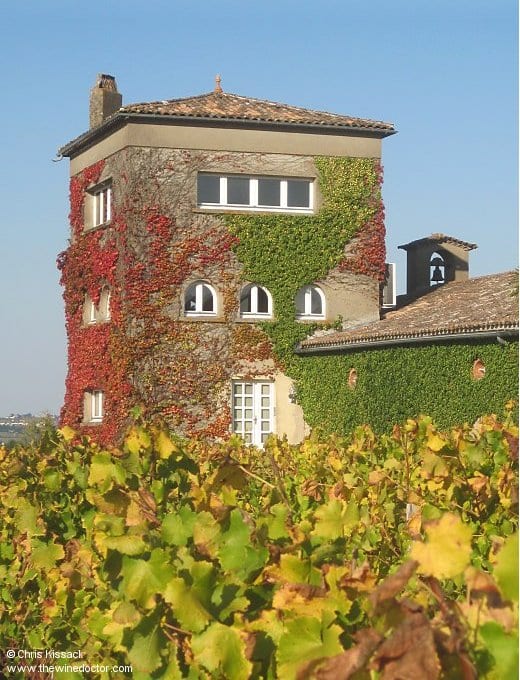
Chateau RieussecThe vineyards, which occupy one of the highest points in Sauternes after those of Yquem which are adjacent, to the east, cover 90 hectares of the 130 hectare estate, and the terroir underfoot is typical gravel interspersed with lime. The vines, which average 25 years of age, are predominantly Semillon (90%) with 7% Sauvignon Blanc and 3% Muscadelle. Yields were always high for Sauternes at 22 hl/ha but there was always strict selection in the chai, whereas nowadays more selection takes place in the vineyard, so reported yields are lower with 15 hl/ha being typical. Once the wine reaches the winery, which was fully rebuilt in 1989, the Rothschild investment really comes into play. The installation of pneumatic presses helps careful handling of the fruit. The vinification is in barrel, with a small-batch approach so that each aliquot can be individually managed and subsequently assessed. There is a strict selection, with only the best wines going into the grand vin, Chateau Rieussec, which then sees up to 26 months in oak barrels, of which approximately half are renewed each year, as has been the case since 1983. If the quality isn't up to scratch, as was the case in 1993 for instance, no grand vin is produced. The wine sees a light filtering and cold stabilisation. Rejected wine goes into the second label Carmes de Rieussec, named for the Carmes de Langon monks that once owned the estate. There are also bottlings under the Clos Labère and Chateau de Cosse labels, as well as a dry white, made from non-botrytised grapes, comprising equal proportions of Semillon and Sauvignon Blanc, called R de Rieussec. Altogether the estate produces approximately 10000 cases of wine, depending on the vintage.

In short Rieussec is today an excellent source of Sauternes, largely down to the investment doggedly put into place by the Rothschild family, with the efforts of Chevalier on the shop floor. Although we should not forget Vuillier, who was simply a man before his time. Ten years later, with a changing attitude to Sauternes and a string of successful vintages through the 1980s, including 1986, 1988, 1989 and then 1990, his tenure would have been much more widely lauded. As it is, it is the Rothschilds that have been in the right place at the right time. The style of wine they and Chevalier produce tends to be one of concentration with elegance, whereas older vintages, under Vuillier, tended towards a more voluptous and fat nature, although they were still of relatively high quality. It is a matter of taste which ones you prefer, but with another string of successful vintages in recent years, including 1997, 1999, 2001 and 2003, I know which era I favour. Even lesser years, such as 1998, are good at Rieussec, as the following notes demonstrate. (28/7/04, updated 19/4/07)

Contact details:
Address: Chateau Rieussec, 33210 Fargues de Langon
Telephone: +33 (0) 5 53 89 78 00
Fax +33 (0) 5 53 89 78 01
Internet: www.lafite.com

Chateau Rieussec - Tasting Notes

Click to locate stockists.

2008

Chateau Rieussec (Sauternes) 2008: A good, sweet, honeyed pineapple fruit, with a lovely strength of aromatics. Quite pure, broad and textured. Not bright or especially elegant, but certainly fresh, with lovely vanilla tones and a nice sweetness. Nicely defined finish. Potentially a very good wine. From my 2008 Bordeaux en primeur assessment. 16.5-17.5+/20 (April 2009)

2007

Chateau Rieussec (Sauternes) 2007: A stylish, rather reserved character, with honey and floral aromas. Fleshy and broad, but quite reserved, with good acids. Less opulent and flattering than some of the other wines, with lots of structure. Very sweet, with a pastille-like fruit. Good botrytis in the midpalate though, and through to the finish. This is very good. From my 2007 Bordeaux en primeur assessment. 16.5-17.5+/20 (April 2008)

2005

Les Carmes de Rieussec (Sauternes) 2005: The nose here is very true to the appellation, showing honey, marmalade and botrytis character. The palate starts off sweet and plump, but there is a bitter note in the midpalate, and not a lot of flesh. It has a leaner and more diffuse character than I expected, and it lacks direction in the finish. Peppery, too. Although there is a big difference in price, I would spend up for the grand vin without a doubt. From a Lay & Wheeler tasting. 14/20 (November 2008)

2003

Chateau Rieussec (Sauternes) 2003: From a half bottle. This vintage has a vibrant, yellow-golden hue which has some promise. It certainly has plenty of youthful character on the nose, which has a floral edge to the honey and pepper-spiced fruit. Deliciously fresh and creamy on the palate, rich, deeply concentrated, with a forceful structure beneath it all. Hugely characterful flavour too. Lots of creamy-oily botrytis in evidence too. Quite grippy. Slightly low acidity, but this still has an adequate structure and backbone. This is impressive wine indeed. 18+/20 (January 2007)

2002

Les Carmes de Rieussec (Sauternes) 2002: The second wine of Rieussec. An appealing, well defined style with some reserved fruit character on the nose. Honey and pineapple again, but elegantly composed, balanced and very nicely knit together. Rather harmonious, fluid and well composed. There is a reserved style here like that on the nose, and good style. A good second wine from a lesser vintage. From the 2007 CIVB tasting. 15.5-16+/20 (October 2007)

2001

Chateau Rieussec (Sauternes) 2001: From a half bottle. Without doubt probably the most talked about wine of this vintage, thanks to an excess of pointy awards. Prices have rocketed. This has a glistening, honey-gold hue. The nose is very fine, with a palpable vibrancy, the freshness of oranges and blossom and freshly scraped vanilla pod, intermingled with chalky, minerally botrytis. Immediately apparent on the palate is a beautifully plump texture, its creamy weight infused with honey, mineral and botrytis richness. This has patent intensity, but also has a divine integration and is very finely poised. And it is very, very long. This is remarkable, and has amazing potential for the cellar. I understand completely why this wine has received such accolades, and I look forward to drinking the rest of my case over the ensuing years. From a 2001 Sauternes assessment. 19.5+/20 (July 2006)

1999

Chateau Rieussec (Sauternes) 1999: From a half bottle. This wine has a rich, deep golden hue in the glass. The nose is just fabulous, and the aromas are the epitome of all that is botrytis, with a heady concoction of scents that sit somewhere between lemons, oranges and pineapples at one end, and honey, toffee and caramel at the other. The palate starts off creamy and rich, with a fine roasted orange seam from the botrytis, delightfully bitter grip as offered by a very good Seville orange marmalade, and delicious sweetness. The acidity is fairly muted, but it still has a fine freshness, and it finishes with a wonderfully complex twist which goes on and on. An excellent wine which is showing very favourably compared with my last tasting, two years ago. If you have any, get one open now! From my 1999 vintage Ten Years On tasting. 18.5/20 (December 2009)

Chateau Rieussec (Sauternes) 1999: From a half bottle. A really quite deep, vibrant gold hue evident in the glass, and certainly has a little more depth and intensity than the preceding vintage. On the nose it first shows a little volatility, fleetingly reminiscent of the 2001 Suduiraut (although nowhere near as pungent), but what this wine really displays is a huge depth. There is a pile of nascent flavour here, especially in comparison to the 1998. On the palate it has richness and fat, carried in a well composed fashion. There is good fresh acidity, laced with a little volatility although this does all blow off with just a little time. It has a lifted, bright style, but is full of grip and is very firmly put together. A wine full of promise, showing power now, but with great potential for the future. This is indeed an excellent 1999. For label images and more see my Wine of the Week write-up. 18+/20 (January 2007)

1998

Chateau Rieussec (Sauternes) 1998: From a half bottle. A rich, mid-gold hue - I think this has deepened in colour a little since my last tasting. An interesting nose, rather high-toned, with toast, nuts and a maturing, somewhat roasted note. A good weight in the mouth, creamy and with good botrytis, plenty of depth and grip, and lots of texture. Appealing substance here, with an orange-tinged freshness. Rather low acidity, but good finish and a good length. A very impressive bottle for the vintage. From a tasting of 1998 Bordeaux. 17/20 (August 2008)

Chateau Rieussec (Sauternes) 1998: From a half bottle. An attractive, lemon-gold colour. The nose has some appealing although subtle notes of botyrtis, and is a little high-toned, but overall it is deeply characterful and very attractive with an array of pleasing aromas. Similar depth to it on the palate, which is firm, quite grippy really, with a masculine, upright style and good structure.  Just a little oily touch to the finish. Really very attractive for what was not an exalted vintage. Great length too. Very good indeed. 17/20 (January 2007)

1997

Chateau Rieussec (Sauternes) 1997: From a half bottle. A delightfully richly coloured, burnished gold. the nose is quite fine showing oranges with a woody, oaky note in the background, with good botrytis character. The palate is unexpectedly rounded and harmonious, showing a fat and grippy and creamy style, but with an appropriate acidity that seems a little more firm than when I last tasted, which is no bad thing. Delightfully vibrant and interesting, with a meaty, savoury finish and plenty of character. Really full of potential, and it should be great with just a little more time in the cellar. From a tasting of the 1997 Vintage at ten years of age. 18+/20 (December 2007)

Chateau Rieussec (Sauternes) 1997: From a half bottle. A deep, burnished, orange-gold. Oranges and flower petals dominate the nose, with good botrytis character and just a touch of volatile acidity. Fat, creamy, full and impressive on the palate, but it is well poised with some delicate acidity beneath it all. But it is undeniably rich, with a lovely, meaty botrytis character. This is certainly still on the way up, and should drink well for years I think. Excellent. 18+/20 (January 2007)

1986

Chateau Rieussec (Sauternes) 1986: From one of my favourite Sauternes vintages, a vintage that, surprise, surprise, I wish I owned and drank more of. A light tartrate sediment, but otherwise a crystal clear mid-gold colour. A wonderful nose, honeyed, full of quince, barley sugar, all very bright and lifted. This is very fine. The same impression comes from the palate, which is upright and mineral, showing a little chalkiness through the midpalate. Full, quince and honey flavour, elegantly creamy but with very precise, well delineated acidity. A lovely balanced sweetness, and a divine length. This is an absolute stunner, which in terms of maturity is still very much on the up I feel. Excellent. From my 2006 Birthday Treats. 19+/20 (March 2006)

1983

Chateau Rieussec (Sauternes) 1983: From a half bottle. Plentiful tartrate crystals. A fantastic burnished orange-gold colour. Open and expressive nose, botrytis-influenced, mature and rich, but with certain freshness. Toast and honey-soaked sponge character. Medium bodied, but builds a richness through the midpalate, showing powerful botrytis and concentration. Toast, marmalade, spicy curd flavours. It keeps a lovely balance throughout, with a lovely fluid elegance on the finish. Delicious. 18.5/20 (July 2004)

1981

Chateau Rieussec (Sauternes) 1981: Tasted alongside Chateau Coutet 1981. A good depth of colour for the vintage. Some richness on the nose, with some botrytis. The palate has great sweetness, with a lovely depth and texture. Complex and structured. Marmalade notes, decent botrytis and correct acidity. This is impressively rich, minerally and enjoyable considering this was a weak vintage for Sauternes and Barsac. 18/20 (July 2004)