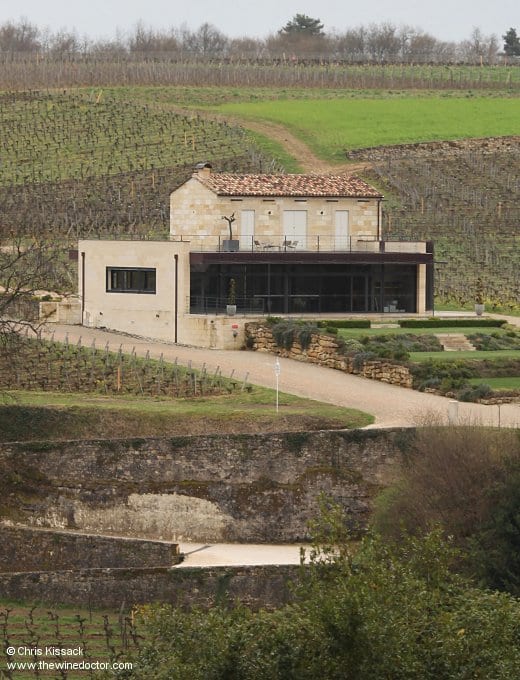
Home > Producer Profiles > Bordeaux Profiles > Chateau Pavie-Macquin

Chateau Pavie-Macquin

Chateau Pavie-Macquin is one of three Pavie vineyards clustered around St Emilion, the others being Chateau Pavie itself, and Chateau Pavie-Decesse. All three were once part of the holdings of Ferdinand Bouffard, a 19th century Bordeaux négociant who owned numerous vineyards in St Emilion, as well as being part owner of Chateau Héritage-Haut-Brion, adjacent to Haut-Brion itself, in Graves. At the peak of his activity in St Emilion he owned more than 50 hectares of vineyard in this region.

Pavie-MacquinBouffard's acquisitions included a variety of plots, including the Fayard-Talleman, Pimpinelle, Dussaut, Pigasse and Larcis-Bergey vineyards. Whilst most of these vineyards were amalgamated to form what is today the 40 hectare Chateau Pavie, two were kept quite distinct; these were the Pigasse vines, which formed the basis for Chateau Pavie-Decesse, and the Chapus-Pavie vineyard. The latter vineyard was purchased by the proprietor of neighbouring Chateau La Serre, Albert Macquin, and this is the basis for today's Chateau Pavie-Macquin. Albert Macquin obviously gave his name to his newly acquired property in St Emilion, but it is not this for which he was most famous. Macquin was a pioneer in the battle against phylloxera, and favoured the grafting of French vines onto American rootstocks. Having studied viticulture, particularly the business of grafting, at the Ecole d'Agriculture in Montpellier, he moved to Bordeaux, where the new and radical concept of grafting onto phylloxera-resistant rootstock met with a frosty reception. So whilst others around him, including the owners of the other Pavie vineyards, tried to coax their vines through infection, Macquin got on with extensive replanting using grafted vines.

Today grafted vines, in Bordeaux and elsewhere, are the norm, and there are 15 hectares at Pavie-Macquin, lying atop the limestone côte that characterises St Emilion, with typical clay and limestone soils. They are predominantly Merlot (70%), with 25% Cabernet Franc and 5% Cabernet Sauvignon. After fermentation the wines spend up to 20 months in oak of which 70% is new each vintage. The grand vin is Chateau Pavie-Macquin, whereas the second wine is Les Chênes de Macquin, and the total output is in the region of 6400 cases per annum.

Today the estate is owned by the Corre family, who since 1995 have contracted Nicolas Thienpont to manage the estate, whilst Stéphane Derenoncourt has control over the vinification. The stories of Derenoncourt and Pavie-Macquin are inextricably intertwined, as it was at this estate that the young cellar-worker was thrust into the limelight. Derenoncourt arrived in Bordeaux in 1982, having hitchhiked his way there, and yet he had no real interest in wine; he spent the next ten years working on the land and playing his guitar. It was not until he secured a job in the Pavie-Macquin cellars that his meteoric rise began, and it was the success of the 1993 Pavie-Macquin, in the context of a terrible vintage, that attracted attention. He was then 'discovered' by Comte Stephan von Neipperg of Chateau Canon-la-Gaffelière, who secured Derenoncourt's advice not only in the running of Canon la Gaffelière but also a new project, which became La Mondotte, one of the region's most exalted garage wines. Under the direction of Thienpont and Derenoncourt the wines of Pavie-Macquin are generally regarded as significantly improved, and this would seem to be confirmed by the promotion of the estate in the 2006 revision of the St Emilion classification to Premier Cru Classé.

My own experience is very limited, but nevertheless the wines I have tasted fit into a theme that is common on the Right Bank. These are wines that teeter on the edge of over-extraction, and apparently they satisfy the palates of the officials overseeing the 2006 revision much more than they do mine. I suppose it is a question of style; what to some are supple, appropriately extracted, hedonistic delights that typify the region are to others simply attenuated and forced. Clearly Pavie-Macquin has much to offer - promotion in St Emilion comes only with detailed assessment of ten vintages - but that does not mean these wines will appeal to all. (2/11/06)

Contact details:
Address: 33330 St Emilion
Telephone: +33 (0) 5 57 24 74 23
Fax +33 (0) 5 57 24 63 78
Internet: www.nicolas-thienpont.com

Chateau Pavie-Macquin - Tasting Notes

Click to locate stockists.

2009

Chateau Pavie-Macquin (St Emilion) 2009: Roasted fruit on the nose here, rather animally in style too, hints of baked-jam. The palate follows in the same vein, being loaded with sweet substance, with lots of tannin too. This all seems very appropriate for Pavie-Macquin, usually a fairly big and mouth-coating style, very highly extracted as we should perhaps expect. Nevertheless there is so much fruit here though that I find it works rather well. An impressive depth and character, although as usual I expect it will generate some polarising opinions. A very well made wine. From my 2009 Bordeaux primeur assessment. 17-18+/20 (March 2010)

2008

Chateau Pavie-Macquin (St Emilion) 2008: Dense, meaty, smoky, confit plum and cherry fruit on the nose, and like its Larcis stablemate a big, creamy style on the palate. The fruit on the palate is slightly high-toned, and there is a lot of extract, with a massive core of tannin. Big, chewy, domineering style, with a huge chewy finish. I find it very hard to predict where wines like this are going. From my 2008 Bordeaux primeur assessment. 16-17+?/20 (April 2009)

2007

Chateau Pavie-Macquin (St Emilion) 2007: Yet another wine tasted twice during the primeurs week, and there I had two different impressions from two different samples. Today this has rather a quiet, dark fruit profile on the nose. The palate has the same character, underpinned by a very hard structure and a layer of ripe, binding tannins. There is a firmly polished outer skin, with a rather ungiving character. Firm tannins in the finish. A serious style showing a lot of structure today, and I do wonder about how the fruit will carry it, but there is potential here. From a tasting of 2007 Bordeaux at two years of age. 15+?/20 (October 2009)

Chateau Pavie-Macquin (St Emilion) 2007: Tasted twice during the primeurs week, the second sample was the more convincing of the two. It has plenty of exuberantly rich, super-ripe expressive fruit, with aromas of liquorice and pure plum and blackberry. Fresh on entry, supple in style, with a high level of extract, but this is well covered by the texture of the wine and doesn't appear to be excessive. A creamy midpalate, overall integrated and stylish. This is certainly seems less overdone than the 2005 and I like it. Very good potential. From my 2007 Bordeaux en primeur assessment. 16-17+/20 (April 2008)

2006

Chateau Pavie-Macquin (St Emilion) 2006: A slightly exotic nose here, rather stony yet perfumed. A dry and reserved palate follows, showing little in the way of sweetness or flesh. Lots of tannic grip though, with a dry, cigar ash feel and heavy extract. A big meaty wine, with just moderate fruit. Over-worked for my palate, with too much focus on extraction. From a tasting of 2006 St Emilion & Pomerol. 15.5+/20 (October 2008)

Chateau Pavie-Macquin (St Emilion) 2006: Rather muted dark fruits on the nose, rather mellow, and it has a rich, sweet, bramble jelly character. Nice tannins, ripe, well spread out on the palate, covered by some ripe, plush fruit. Not particularly fresh or vigorous, but firm, and grippy, and nicely fleshed out. Grip on the finish too. Good wine but not the most vigorous. From my 2006 Bordeaux assessment. 15.5-16.5/20 (April 2007)

2005

Chateau Pavie-Macquin (St Emilion) 2005: Like the Larcis Ducasse the immediate perfume of the nose gives way to dark curranty fruits, soy sauce and a very feral, gamey style of fruit. There are elements of it that appeal, and some that are less attractive. Pure in substance at the start, with a more chalky granularity to the texture coming through later, in the midpalate. Lots of backbone here, rather hard and firm, with a more gentle application of flesh and fruit on top. There are attractive suggestions of elegance in the composition here, and I wonder if this will move more in this direction with time. Overall I think I like it, certainly more so than on previous tastes, although it will need many years in order to come completely around. From a 2005 Bordeaux tasting at four years of age. 16.5-17.5+/20 (November 2009)

Chateau Pavie-Macquin (St Emilion) 2005: This wine has very dark, sweet, macerated cherry fruit character on the nose, with a slightly hot and feral edge to it. Immediately ripe and rounded on the palate, with a creamy texture, the fruit doesn't come through as the nose suggested it would. And dominating it all there is a huge presence of massive, chewy tannins, which with the relatively low acidity makes for a very overdone style. I find it to be over-extracted, which is a shame as there are some good features here. From my tasting of 2005 Bordeaux at two years of age. 14.5-15.5/20 (October 2007)

Chateau Pavie-Macquin (St Emilion) 2005: M 75%, CF 25%, CS 5%. Another wine with a remarkable dense colour. Rather an appealing nose, showing some plummy Merlot fruit with traces of wood-spices and sandalwood. Plump, rounded palate, carrying a pile of extract and a firm, rather hard style of tannin. The acidity is also rather lacking. Pushed just a little too far I think; again, this wine teeters on the brink of over-extraction. It will, however, appeal to many. From my 2005 Bordeaux en primeur tasting. 14.5-15.5/20 (April 2006)

2004

Chateau Pavie-Macquin (St Emilion) 2004: An evident ripeness here, a confiture richness, but a fine style nevertheless. Nicely polished, fine flavours, enticing, rather a lot of grip though. Very well provided with structure, but in combination with good acidity and texture too. A lot of extraction and a lot of ripeness too. Not the freshest of all these wines, but it has some vivacity. Good. From a tasting of 2004 Bordeaux. 15.5/20 (April 2007)

Chateau Pavie-Macquin (St Emilion) 2004: A pretty colour. Good density of fruit on the nose, still with a nutty character, probably oak-derived. Good character, but a rather lean presence on the palate; in fact it seems rather emasculated and a bit over-stretched. This wine provides sufficient interest for short term drinking, but is quite simply over-extracted and therefore a disappointment. I don't think it will cope well in the cellar. 14.5/20 (April 2006)