Home > Vintages and Regions > Bordeaux > Bordeaux CIVB Annual Tasting 2007

Bordeaux CIVB Annual Tasting 2007 Part 2

Bordeaux CIVB Tasting 2007

Notes from a tasting of wines from Bordeaux:

Pt 1: The Left Bank

Pt 2: Right Bank, Sweet

Part two of the notes from this tasting features the wines of the right bank, not only from St Emilion and Pomerol, but also from some less frequently encountered appellations such as Fronsac and Lalande-de-Pomerol. My collection of notes then rounds off with the sweet wines, which are of course largely from the left bank, where the appellations of Barsac and Sauternes are located, but also a few from nearby appellations, including Cérons next to Barsac, and the Premières Côtes de Bordeaux and Loupiac just across the river. As with the notes concerning the wines of the Médoc and Graves presented in part one, the wines range from those of minor estates to perhaps grander examples from more exalted properties.

As before, I have included details on stockists as well as prices (many of which do not include taxes and should only be used as a guide) with the notes, along with wine-searcher () links to facilitate price comparisons. I have noted that some wine-searcher prices can be very favourable compared to those presented below, so it is certainly worth shopping around. (6/11/07)
Bordeaux CIVB 2007: Right Bank & Sweet - Tasting Notes

Tasted in October 2007. Click to locate stockists.

Premières Côtes de Bordeaux

Chateau Carignan Prima (Premières Côtes de Bordeaux) 1999: A densely coloured wine with a lovely nose here, of exotic and plump fruits. This is very appealing and very well defined. There is fruit in abundance, and bright style, with a moderately rich texture all underpinned by a firm acidity. There is some grip as well. I think this has plenty of appeal and potential to do something in the cellar too. Very good. 16-16.5+/20 (Corney & Barrow, £14.14)

Chateau la Gontrie (Premières Cotes de Bordeaux Moelleux) 2004: A vibrant golden hue. There is an intense honeyed character to the nose, which also has a slightly medicinal and slightly raisined quality, perhaps reflecting a long hang-time to obtain the effects of passerillage. It has a simple but charming presence on the palate, with a sweet, somewhat confected style with accents of oranges and vanilla, and a very creamy yet tangy texture. Appealing and a decent drop at the price. 14.5/20 (Raeburn, £5.99 per 500ml)

Fronsac & Canon-Fronsac

Chateau Moulin Pey Labrie (Canon-Fronsac) 2000: This is a very dark wine, and it although it doesn't start off with a very expressive nose it soon opens out in the glass. A full style, quite plump, filled out with extract and texture in a creamy style. Grippy substance, correct acidity and a good grippy finish. Plenty of stuffing and potential for the cellar here. 16-16.5+/20 (Corney & Barrow, £13.49)

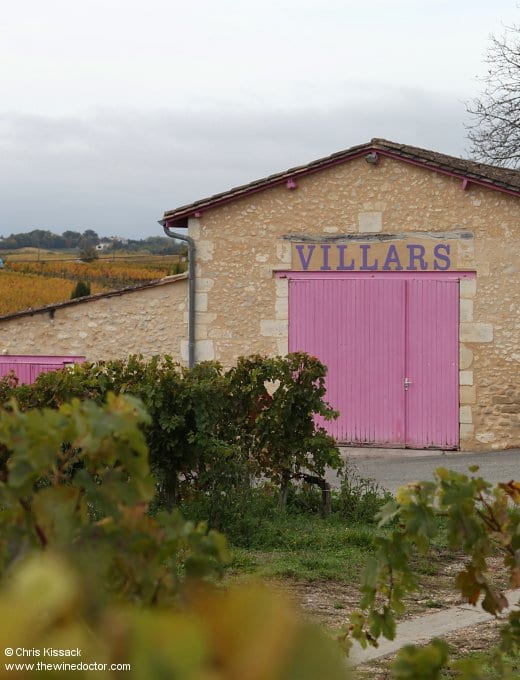
Chateau Villars (Fronsac) 2001: It has been a while since I have tasted anything from Chateau Villars. This has a rather dense colour, and isn't showing much on the nose today. Light and lifted texture on the palate, reserved and a touch stony, with nice grip. There is a lot structure here, beneath a broad and fleshy style which holds nicely together as a result. A good, grippy finish. I like it. 16+/20 (Justerini & Brooks, £9.41)

St Emilion

Chateau Corbin (St Emilion) 1999: A fairly dense hue, with sandy-plummy fruit on the nose, presented in a dry and reserved style. A lovely texture, ripe and creamy, quite rounded, with some spiciness to the mid-palate grip. Very fleshy but also peppery and lively, plump fruit but with a backbone. Broad and really rather appealing, and surprisingly good quality for 1999. 16.5+/20 (Corney & Barrow, £13.94)

Clos de la Cure (St Emilion) 2003: Rather sandy fruit on the nose here, red and jammy, with a little not of confiture. On the palate it starts off full but strangely seems to move towards a leanness through the midpalate, and it also shows the hot texture of the vintage. It has quite a little grip on the finish which tingles and prickles, but it isn't over the top. There are some good points here. 15/20 (Boutinot, £14.49)

Chateau Teyssier (St Emilion) 2004: A Jonathon Maltus estate. A really dark hue here, very dense right out to the rim. It has a slightly reserved but very promising nose, with dark fruits and fading notes of honeyed oak. Nice weight on the palate, creamy, but quite cool in style, before it shows a denser, more meaty side through the midpalate. This has a fine, firm style with a good backbone of acidity and ripe tannins at the finish. Very good indeed, and a good deal at this price which results from overstocking. 16.5-17+/20 (Villeneuve, £9.99)

Chateau Laforge (St Emilion) 2004: Another Malthus wine, one that features Cabernet Franc more than Merlot I think. A very deep purple hue here, and an expressive nose to match. Full, plump and yet very well defined on the palate, which has a nice, slightly minty style. It has a lot of texture but it is well reined in with the help of some firm, acidity. It is full-on but very nicely composed, and I like it. It could do with a little time in the cellar though. 16.5-17+/20 (Justerini & Brooks, £17.60)

Chateau de Candale (St Emilion) 2004: A very dark wine with rather sandy character on the nose, with some plummy notes alongside. Clean, attractive and perhaps even exuberant though, and on the palate it shows a plummy, dark, and grippy style. There is still a little nutty oak resolving, and a creamy, rounded texture underpinned by a good structure. Appealing wine. 16-16.5+/20 (Waverley TBS, £12.99)

Chateau Fonplégade (St Emilion) 2004: A desperately dark, inky-opaque wine. It has an appealing nose though, with plenty of expressive, spicy, exotic character. The palate is perhaps unsurprisingly big, soft and creamy, although I admit it has a good texture and some depth to compensate. It is meaty, cool, and touch reserved at the end, and it does have quite good definition actually. There is a fine grip underneath its voluptuous nature. Overall, for those that like the big, impressive, flashy side of claret, this will be good choice. 17+/20 (Waverley TBS, £17.49)

Pomerol & Satellites

Chateau des Anneraux (Lalande-de-Pomerol) 2003: A mature hue, rather a medicinal nose, with hot cherries and candy cough-sweets. Rather stretched out on the palate, with some grip underneath it all, some texture, but a prominent medicinal character as found on the nose. I really don't like this. 12/20 (Villeneuve, £14)

Chateau de Bel Air (Lalande-de-Pomerol) 2004: The colour here is fading in a fairly advanced fashion for a 2004 I think. The nose is certainly interesting, showing an unusual, seashell-stony character, and a little fleeting note of organic compost. The body has appeal, although it is rather dry and a touch oaky still, and there are some slightly coarse tannins. The finish is gritty and marked by a little caramel and toffee. This is merely decent. 14/20 (Waverley TBS, £7.49)

Chateau Ferrand (Pomerol) 2003: Another wine with a mature, red-oxblood hue. The nose is warmand full, exotic with a pretty floral edge. On the palate though it is rather straight and lean, with peppery tannins which quickly come to dominate the midpalate. It has a nice flavour but I find the structure reflecting the vintage, and it is a touch too brutal for me. Lots of grip on the finish, too, as you might expect. 14.5+/20 (Cockburns, £16.20)

Chateau Guillot (Pomerol) 2002: A dense, surprisingly mature hue, showing some browning. A mature and open nose to match, rather perfumed with notes of woodspice. Full, textured, very soft and rounded, creamy and yet easy-going. It has soft acidity and there is not a lot of backbone to it. There is little grip or tannin, and curiously there is a touch of balsamic to it. Drink soon if you have any. 14.5/20 (Villeneuve, £20)

Chateau Certan-Giraud (Pomerol) 1998: The final vintage before this property changed hands and was divided, creating Chateaux Hosanna and Certan Marzelle. There is elegance on the nose here, showing a restrained but characterful wood-spice and plum. It is softly composed on the palate, gently gliding and somewhat detached which I like. There is a little grip through the midpalate, and good extract underpinning a nice texture. Nicely composed but not a very firm style. I think this will be drinking well very soon. 16.5+/20 (Corney & Barrow, £34.15)

Cérons, Loupiac & Ste-Croix-du-Mont

Chateau Haura (Cérons) 2004: This has real appeal on the nose, which has an elegant mineral and honey character, presented in a lifted and vivacious character. It fills out nicely on the palate, which is packed with flavours of honey, minerals and orange blossom. Nice correct acidity. An integrated, well rounded, well-knit style. Excellent value for money. 16.5/20 (TM Robertson, £10.99)

Chateau du Seuil (Cérons) 2004: A fine golden hue here. The nose is quite delightful, full of notes of crisp candied pineapple, vanilla and glace fruits. There is an exotic, spicy side to the palate which has a plump style, over rather soft acidity but the flavours are very well defined nevertheless. Very deep and characterful, with a slightly burny, caramel-orange edge and also a little note of tropical fruit. An attractive wine. 15.5/20 (Matthew Clark, £9.99 per 500ml)

Chateau du Cros (Loupiac) 2002: An appealing nose, full of lifted honey and lanolin character. Rather well rounded out with a nice weight on the palate, with some good flavour, backed up by a rather savoury, peppery, grippy core. A plump style of wine but this is balanced by a nice acidic backbone making this a very easy wine to drink. Good. 15.5/20 (Inverarity, £7.99 per 500ml)

Chateau La Rame Reserve du Chateau (Ste-Croix-du-Mont) 2000: A rather smoky, minerally, organic nose here. A little residual sulphur still swimming around in the mix also. Very well flavoured on the palate though, with some dense orange peel and a streak of botrytis, backed up by a good acid backbone. Creamy and dense, this has an appealing style which might even develop nicely in the cellar if you can resist it now. 16.5+/20 (Friarwood, £20)

Sauternes & Barsac

Ginestet 'Classique' (Sauternes) 2005: A fairly pale hue here, but with an expressive and fresh pineapple nose. A lighter style is suggested, and this seems true on the palate, where there is a nice body and grip apparent through the midpalate but not a lot of complex character. It is clean, plump, with notes of botrytis and oranges, but also with a little metallic twang too. It is priced fairly but there are better wines to be had I think. 15/20 (Boutinot, £9 per 500ml)

Lurton 'Les Garonelles' (Sauternes) 2004: A pale, mid-gold colour. This has a fairly reserved style, with some candied fruit on the nose. It is not so dense on the palate as some, and it perhaps is a little light on concentration. Fresh though, nice vanilla flavour, with very appealing acidity. But overall it doesn't have enough interest for me. 13.5/20 (Matthew Clark, £9.99 per 375ml)

Rothschild 'Baronne Pauline' (Sauternes) 2003: The bottle is graced with a distinctive image of Baroness Rothschild. A sweet and stylish nose showing a complex blend of nettly freshness with a more gentle honey and lanolin character. The palate is full, nicely complex, quite exuberant, plump but with substance and texture too. There are plenty of positive points here, I must say. It may cellar well too. 16.5+/20 (Baron Philippe, £23.99-£24.99)

Chateau Bastor-Lamontagne (Sauternes) 2003: A pale golden wine, with a nose of honey, vanilla and lanolin. It is plump, creamy, rich and resinous, although it lightens up somewhat through the midpalate. Not as much flavour here as the texture demands, and lower acidity than is often the case with Bastor. There isn't the usual definition I expect. Good though. 15.5/20 (Waverley TBS, at least £7.50 per 375ml)

Chateau Briatte Cuvée Speciale (Sauternes) 2002: This has a fairly light hue, with an interesting array of smoky, powdered rocks and minerals on the nose. The palate follows on from this beginning, spiced with pineapple and honeyed fruits presented in a very firm, acidic frame. Bright, tingling freshness, even a little nettly. This is decent stuff. 14.5/20 (Corney & Barrow, £14.81)

Les Carmes de Rieussec (Sauternes) 2002: The second wine of Rieussec. An appealing, well defined style with some reserved fruit character on the nose. Honey and pineapple again, but elegantly composed, balanced and very nicely knit together. Rather harmonious, fluid and well composed. There is a reserved style here like that on the nose, and good style. A good second wine from a lesser vintage. 15.5-16+/20 (Alexander, £12.99 per 375 ml)

Chateau Suduiraut (Sauternes) 2002: A pale golden hue, and a subtly honeyed nose, with not a lot of botrytis. Rather a soft style on the palate, which has a fleshy, creamy style infused with vanilla, flower petals and oranges. The acidity is fairly correct. It is attractive, elegant and although it has lots of grip on the finish it is not a heavyweight. This is approachable now, but will be better in a few years I think. 16-16.5+/20 (TM Robertson, £42)

Chateau du Levant (Sauternes) 1999: This does not seem too expressive on the nose at first, with just some notes of creamy vanilla, although it is more giving on the palate. Here there is more than a touch of orange and grapefruit, with some botrytis character behind it all. There is even a little streak of caramel, cut through by correct acidity. A dense and quite resinous style which will appeal to many. 15.5/20 (Edinburgh Wine Importers, £7 per 375 ml)

Chateau Bastor-Lamontagne (Sauternes) 1999: A second vintage of this wine. This has a mid-golden hue. It is very fresh on the nose, with attractive lightly honey-coated fruits. On the palate it is typical Bastor, with a lighter style than some others, fresh and delicate rather than opulent, but nicely lifted by an incisive blood orange acidity. This is very true to style for Bastor, which often seems to show this firm body of acids I think. Good. 15.5/20 (Alliance, £14.49 per 375ml)

Chateau Broustet (Barsac) 1995: A fairly rich, golden hue on inspection. The nose is certainly distinctive, with a rather organic nose, with notes of smoky hillside bracken and minerals. There is a core of mineral on the palate, but it seems quite disjointed and separate from the rest of the wines. Around it there is a texture and a fruit profile matching the nose, but overall it seems a touch steely and stripped out. 13.5/20 (Friarwood, £18.75)