Home > Producer Profiles > Loire Profiles > Philippe Delesvaux

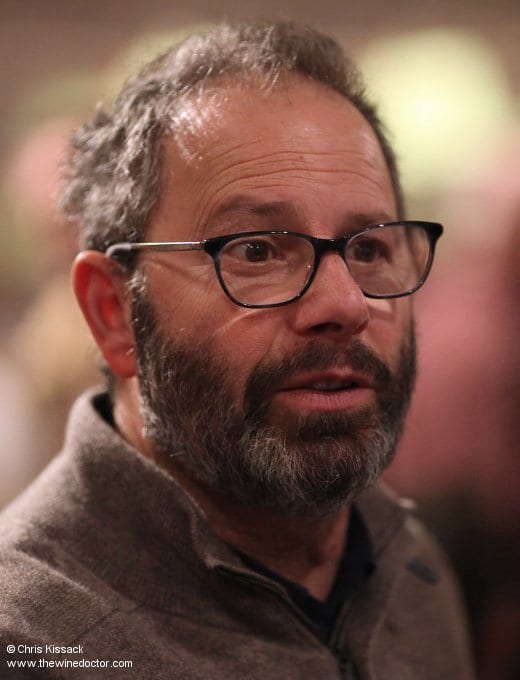
Philippe Delesvaux

The arrival of new blood in a region has the power to refresh, enthuse and invigorate, and this is just one facet of wine where the Loire may hold an advantage over more defined wines regions such as Bordeaux and Burgundy. There many (if not all) of the greatest terroirs have already been planted and the estates, established for many centuries, are either handed down from one generation to the next or bought and sold for eye-watering prices. The Loire, however, is much more open to newcomers; vineyards remain affordable, great terroirs remain, in some cases unexploited. Even today, new arrivals along the valley provide fresh interest for wine lovers, just as they did several decades ago. In the early 1980s, Philippe Delesvaux was one such neophyte.

Delesvaux, a Parisian by birth, came to the Loire to pursue his agricultural studies. His work on a farm in Anjou provided exposure not only to the management of cereal crops and animal husbandry, but also to a little viticulture. It was this latter element that clearly interested Philippe the most; he ultimately settled in the region, and 1978 is the year he really started out, a new beginning which he commemorated in 1998 with the release of Le 20, a special cuvée of Coteaux du Layon to celebrate his personal achievement of 20 years of viticulture. He didn't acquire his own vineyard until 1983, and his first vintages were vinified in little more than a shed. Nevertheless, it was not long before he was turning out benchmark wines comparable to the very best of the appellation. By the time Jacqueline Friedrich's A Wine & Food Guide to the Loire was published in 1996 she was content to rank Delesvaux at the very highest level for his Coteaux du Layons, alongside the likes of Claude Papin and Vincent Ogereau. Philippe Delesvaux had most certainly arrived!

Philippe Delesvaux

Philippe and his wife Catherine (above), who originally trained as a teacher but left this career to join Philippe in his work in 1997, radiate contentment, confidence and joy; they are clearly very happy with their wines and, I suspect, their lot as a whole. Such contentment does not, however, reflect complacency; there has been a lot of hard work here over the years, work that reflects the Delesvaux philosophy: "Un bon vin ne peut se faire sans un bon raisin. Nos vins naissent de ce raisin, rien que de ce raisin", which I would say translates as "You can't make a good wine without good grapes. Our wines are born of the grape, and nothing but the grape". With this in mind Philippe manages his vineyards on organic and biodynamic principles, originally working with ECOCERT accreditation for the former but since 2006 he also has biodynamic FNIVAB certification. There are no herbicides and pesticides here, so weeds are controlled by working the soil, and the grass planted between the rows also helps, as well as challenging the vines. Yields are controlled by pruning, debudding and bunch thinning, there is leaf thinning during the summer, all manual tasks, and the eventual harvest is naturally also by hand.

Philippe DelesvauxThese vineyards today amount to around 10.5 hectares, of which just over 2.2 and 1.6 hectares are committed to Cabernet Franc and Cabernet Sauvignon respectively, with just over 7 hectares for Chenin Blanc, of which 1 hectare is planted franc de pied, in other words the vines are on their own roots rather than on a grafted rootstock. Once harvested, a process that involves several tries through the vineyard, the fruit is sorted and then fermented without chaptalisation, enzymes or added yeasts. Plot-by-plot and tri-by-tri vinification permits assembly into a number of different cuvées, including Anjou in both white and red forms, and Coteaux du Layon, with the celebrated Selection de Grains Nobles being the most desirable. Starting with the dry whites, however, these are the Feuille d'Or and Cuvée Authentique, both Anjou blanc, the defining characteristic of the latter being that it is made from the fruit of the ungrafted vines. The Coteaux du Layon firmament begins with an entry level St Aubin cuvée, a blend of fruit from the domaine's vineyards characterised more by passerillage (the sweetness that comes from late harvest dehydration) than by botrytis. This cuvée is built from third and subsequent tries, whereas the separate cuvées from the Clos de la Guiberderie and Clos du Pavillon vineyards (the latter acquired in 1993) are both are produced from the second tri through the vineyard, often bringing in a mix of botrytised and ripe passerillé fruit. Finally, the aforementioned Selection de Grains Nobles is produced from the first tri, which brings in pure botrytised grapes. The red vineyards are, naturally, employed in the production of a generic red Anjou sec, as well as the lower-yield Anjou Montée de l'Épine.

Much of my early experience of the wines of Delesvaux seemed to focus on the 1998 vintage, purely by chance rather than by design. A difficult year, Philippe proved his skill by turning out a delicious Clos du Pavillon, and the quality in the aforementioned Le 20 was similarly high. An encounter with Philippe and Catherine at the Renaissance des Appellations tasting in Angers in early 2009 was my chance to sample some more recent vintages, and to reassess this vigneron's very worthwhile efforts. (5/8/04, updated 21/7/09)

Contact details:
Address: Les Essarts, La Haie Longue, 49190 St-Aubin de Luigne
Telephone: +33 (0) 2 41 78 18 71
Fax: +33 (0) 2 41 78 68 06

Philippe Delesvaux - Tasting Notes

Click to locate stockists.

2008

Philippe Delesvaux Anjou Feuille d'Or 2008: Bottled September 2009. There is certainly a house style at Delesvaux, and this wine has it in spades. A very papery, crisp style of Chenin Blanc on the nose, leafy with white fruit elements. The palate kicks off a little lean, with only moderate concentration, although it has a fresh and defined style, with a trace of mineral. And there is a nice, rather promising flourish of tangerine zest at the end. This one has promise. An upate from the 2010 Renaissance tasting. 15.5+/20 (February 2010)

Philippe Delesvaux Anjou Authentique 2008: This cuvée is produced from ungrafted vines. Fresh and stylish, a fine nose, and there is certainly something more to it than there is to the Feuille d'Or this vintage. A deeper character in terms of aroma, and a more stylish palate. Firm, rather papery, again a twist of oranges and tangerines in the finish. Firm midpalate. A step up, again with promise for the future. An upate from the 2010 Renaissance tasting. 15.5-16+/20 (February 2010)

Philippe Delesvaux Anjou Rouge 2008: This cuvée is 100% Cabernet Franc. It certainly has an interesting nose for such a youthful cuvée, the fruit here marked by a rather obvious note of game. The palate is at the lighter and fresher end of the spectrum, with good fruit but only moderate weight. The red wines are not the strongest here, I think. An upate from the 2010 Renaissance tasting. 15+/20 (February 2010)

Philippe Delesvaux Coteaux du Layon St Aubin 2008: This particular cuvée was harvested in three tries, the first botrytised, the next half-botrytis and half-passerillage, the last all passerillage. Despite all this care it shows a rather muted and sullen nose today, with traces of gentle, minerally, honey-tinged fruit, but it is all very subtle. A very nice style on the palate though, gently honeyed, defined, building well in the midpalate. Restrained, papery like the dry cuvées, and overall a good but reserved style. Difficult to judge. An upate from the 2010 Renaissance tasting. 15.5-16.5+?/20 (February 2010)

2007

Philippe Delesvaux Anjou Feuille d'Or 2007: Quite clean on the nose, perhaps a touch muted. Gently mineral, subtle fruit. A lovely and expressive palate though, very harmonious, and yet gently warm and flattering. Underneath, though, there is latent grip and a good, bright acidity which lends it a good crispness. Good fruit and grip on the finish. Tasted at the 2009 Renaissance tasting. 16+/20 (February 2009)

Philippe Delesvaux Anjou Authentique 2007: From ungrafted vines. A pungent nose here, mealy, with a little trace of baked apple, suggestive of an oxidative character here. On the palate it is rich, rounded, with some good acidity. Despite the big style it has a rather soft texture, and it has more of that mealy element notes on the nose. Grippy finish. That streak of oxidation spoils this cuvée for me. Tasted at the 2009 Renaissance tasting. 14?/20 (February 2009)

Philippe Delesvaux Anjou Rouge 2007: This is 100% Cabernet Franc. It has a very pale hue, with the aromas of cooked strawberry and a burnt, medicinal character. The texture on the palate is smooth and perhaps even rather oily, and the fruit is somewhat one-dimensional. I think this wine reflects what a difficult vintage this was for the Anjou and Touraine reds. Tasted at the 2009 Renaissance tasting. 13.5/20 (February 2009)

Philippe Delesvaux Coteaux du Layon St Aubin 2007: Gently honeyed mineral fruit on the nose here, but rather a lean palate, with only a soft sweetness and an overt structure. It has a rather angular character on the palate, although it shows a number of attractive mineral components. It just doesn't possess a satisfactory degree of richness for me. Tasted at the 2009 Renaissance tasting. 14+/20 (February 2009)

Philippe Delesvaux Coteaux du Layon Sélection des Grains Nobles 2007: This is a huge step up from the previous wine; here we have a delightful orange-honey sweetness and minerality on the nose. The palate is flattering, with honeyed, orange-laden botrytis as suggested by the nose, with lots of marrowy potential. This is all backed up by good acids and minerality too. The finish is sweet and defined, the overall impression one that is bright and appealing. A fine effort. Tasted at the 2009 Renaissance tasting. 17.5+/20 (February 2009)

2006

Philippe Delesvaux Anjou Feuille d'Or 2006: In the glass it has a fairly rich, yellow-gold hue. This is followed on the nose first of all with baked apple, and then notes of almond and pineapple. It is delightful, especially as that baked note fades with a little air, and it maintains a fresh yet sweet dessert apple element. The palate also holds hidden surprises, with layers of apple, mineral and nut, which come across the palate in waves. There is grip here too, a rounded and very balanced mouthfeel, and most importantly a very harmonious, cottony composition. Delicious stuff. For label images and more see my Wine of the Week write-up. 17/20 (August 2009)

Philippe Delesvaux Coteaux du Layon Sélection des Grains Nobles 2006: This cuvée is produced from 100% botrytised fruit; in keeping with this and its extra couple of years in bottle it has an open and characterful nose, of honey and caramel and beeswax, all stylishly wrapped together. Broad on the palate, with a light grip to it, with lots of botrytis character, and a good backbone of acidity too. A fine and supple style, with a touch of power in the finish. Good for the cellar. An upate from the 2010 Renaissance tasting. 18+/20 (February 2010)

1998

Philippe Delesvaux Coteaux du Layon "Le 20" 1998: This cuvée was produced to celebrate 20 years of viticulture for Delesvaux, from 1978 through to 1998. The wine has a remarkable colour, a deep and burnished orange-gold, with aromas of botrytis, with a bitter edge. This character comes through on the palate, where the hugely rich and viscous body is spiced with honey, botrytis and marmalade, but also more lifted elements such as herbs, especially thyme. A very creamy style, rich, with grip and substance, although the acidity is certainly somewhat overwhelmed. Nevertheless it is certainly a noteworthy wine, and there is much here that is good. From my 2008 Loire wine tasting notes. 17.5/20 (July 2008)

Philippe Delesvaux Coteaux du Layon St Aubin Clos du Pavillon 1998: My final bottle of this wine, sadly. It remains a deep, burnished orange-gold hue. The nose is so characteristic of this wine, again showing intense minerals, with a rocky-stony character, and plenty of botrytis giving a caramel-quince streak. The palate is undeniably rich, again full of botrytis, with a creamy-oily texture, fabulously hedonistic, low in acidity, yet focused and stylish. With a long, fading finish, this is really excellent. A Christmas Wine. 17.5/20 (December 2006)

Philippe Delesvaux Coteaux du Layon St Aubin Clos du Pavillon 1998: Rich, burnished orange-gold. Lovely nose, heady and aromatic, with plenty of rich orange and quince character, with a firm volcanic mineral streak as well. Rich yet balanced, with an appealingly, slightly bitter structure. Absolutely packed with mineral influences, smoke and gunpowder. Superb wine for what is essentially a lesser vintage. Good length. From a Loire Extravaganza tasting. 17.5+/20 (July 2005)

Philippe Delesvaux Coteaux du Layon St Aubin Clos du Pavillon 1998: Harvested at 20 degrees potential alcohol. The Clos du Pavillon is normally the source of fruit for Delesvaux's super Carbonifera cuvée. A deep, rich, golden hue. The nose is fat and loaded with minerals, botrytis, smoke and cordite, offset by notes of flower-petals. The volcanic soils shine through. Balanced palate, combining delicacy and poise, and a superbly fresh acidity, with a full and rich texture and a slightly grippy structure. Notes of quinine, alongside prolific mineral and gunpowder flavours. Delicious stuff. 17.5+/20 (June 2004)