Home > Producer Profiles > Bordeaux Profiles > Chateau du Tertre
Chateau du Tertre
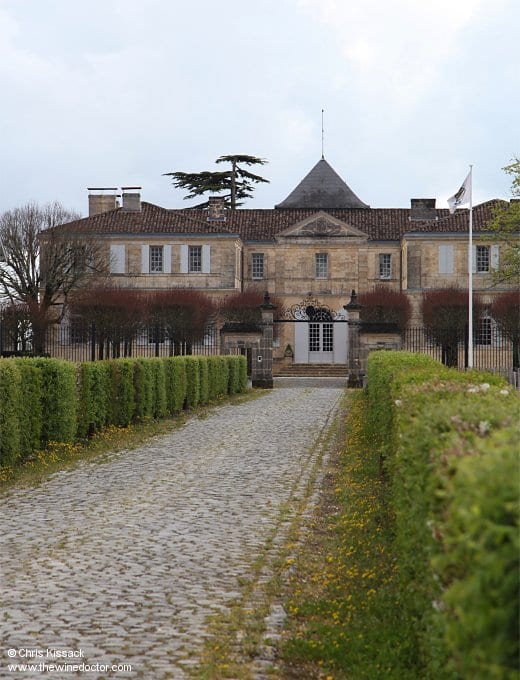
In the south-western reaches of Margaux is Le Grand Poujeau, a large gravel plateau which peaks at just over 20m above sea level. The vines here belong to several well known Margaux chateaux, including Giscours and d'Angludet, but many of them are owned by Chateau du Tertre. Indeed, tertre refers to a hillock or knoll, and this is the origin of this estate's name.
Although the chateau at du Tertre dates only from the 18th century, the origins of the estate are ancient, as it once belonged to the Seigneurie d'Arsac. This is one of the oldest of the Médoc's noble families, very early records revealing the presence of a Guillaume Guiral d' Arsac in 1143. The family, which was allied to the English during the Hundred Years War, had a stronghold at Arsac, which was held by Guillaume Guiral's descendents until the 16th century. At this time the current Seigneur d'Arsac had two daughters, Jacquette and Marguerite; Jacquette married Michel Montaigne, and it was Michel's brother Thomas de Montaigne that assumed the title of Seigneur d'Arsac. The original Arsac stronghold was destroyed during the Revolution, but subsequently rebuilt, and is what we now know as Chateau d'Arsac, the Margaux cru bourgeois estate. What became the Chateau du Tertre of today was brought into the seigneury by the Montaigne family.
In the century that followed, the estate subsequently passed to the Arrérac
family before coming into the ownership of the Marquis de Ségur. During this
period in Bordeaux's history the Ségur family amassed a huge property portfolio,
including many Cru Classé and Cru Bourgeois estates of the future; their
holdings extended north into St Estèphe (Phelan-Ségur being an obvious example) and south into
Margaux as
well. At the time of the 1855 classification, however, in which
Chateau du Tertre was ranked as a fifth growth, it was in the hands of Charles Henri, although he
subsequently sold it on to Henri de Koenigswarter. Through
the latter 19th and early 20th century, the sequence of phylloxera, worldwide
economic depression and war had the usual effects at du Tertre. Hope came when
the derelict property was purchased by the Gasqueton family, who already owned
another ex-Ségur property in the shape of Calon-Ségur, in 1961. There was
dramatic investment and certainly an improvement in the wines was reported, but
although satisfactory they never established a thrilling reputation. For that to
happen another change of ownership was required, and following Gasqueton's death
in 1995 the estate was sold by his widow to Eric and Louise Albada Jelgersma of
Chateau Giscours. It is under the tenure of Jelgersma, with assistance
from manager Alexander van Beek, that the wines of du Tertre (and Giscours,
which is just next-door) have really taken off; success at the latter estate has admittedly been tainted a
little by an oak scandal, but there have never been any such concerns at du Tertre.
The du Tertre vineyards are remarkable for being in a single, coherent block adjacent to the chateau, covering about 50 hectares of the aforementioned plateau in Arsac. This is a gravelly, pebbly mound typical of the region, planted with 40% Cabernet Sauvignon, 35% Merlot, 20% Cabernet Franc and 5% Petit Verdot. The vines average about 35 years of age, with many dating from the 1950s and 1960s, the average age brought down by the planting of 4 hectares of Cabernet Sauvignon and a little Merlot in 1999. With the arrival of Jelgersma, however, there was a new attention to detail in the vineyard, with better training and care of the vines, and a green harvest, all destined to improve quality. The cuvier was also subject, like the chateau buildings themselves, to extensive restoration. The harvested fruit is fermented in traditional wooden vats stretching up to the first floor, with temperature control, and a maceration of up to three weeks. As well as the in-house team Jelgersma has engaged the services of local oenologist Jacques Boissenot in ratcheting up the quality. The wine spends up to eighteen months in oak, of which 50% is replaced each year, with racking every three months and an egg white fining at the end. Throughout the process, from harvest to barrel, the wine is transferred by gravity feed rather than mechanical pumping. Clearly, with such care and modernisation in vineyard and cellar, the direction in which Jelgersma is taking du Tertre is up.
Of recent vintages it was the 1996 that really alerted me to the quality that could be provided by this underrated property. It showed well, tasted in a small line up of 1996 left bank wines, and although not the best by a long shot it was certainly very serviceable and was sufficiently good for me to put a few away in the cellar. This vintage, however, actually predates the involvement of Jelgersma, who took control in the few years that followed. His team oversaw the élevage of the 1997 vintage, but it was in 1998 that they must assume full responsibility for the wine. Earlier vintages from the Gasqueton era, such as 1983 and 1986, have given less pleasure; the 1983 was certainly past it, the 1986 rather sooty and hard. Subsequently, however, the Jelgersma wines have been fine. The 2001 has shown on several occasions to be a finely balanced, attractive wine, and whereas the 2003 is good, it does show borderline acidity, a common problem following the heat of the vintage. The 2005 is also of very good standard, confirming the efforts of the new proprietors, and reminding claret drinkers that Chateau du Tertre is certainly a wine that should no longer be disregarded on the basis that it is a sorry underperformer. (12/9/06)
Contact details:
Address: Chateau du Tertre, 33460 Arsac
Telephone: +33 (0) 5 57 88 52 52
Fax +33 (0) 5 5788 52 51
Internet: www.chateaudutertre.fr
Chateau du Tertre - Tasting Notes
Chateau du Tertre (Margaux) 2009:
Cabernet Sauvignon 55%, Merlot 22%, Cabernet Franc 15%, Petit Verdot 8%.
Restrained use of Merlot and plenty of Petit Verdot here. Bright and vibrant and
creamy fruit here, dark but also very pure. There is a lovely flesh to the
palate, with creamy and well integrated tannins. The fruit does have a slightly
lush character, perfumed with violets, but underneath there is a ripe and firm
backbone of tannin combined with good acidity. Really good potential here from
the Giscours-du Tertre stable. From my
2009 Bordeaux
primeur assessment. 17.5-18.5+/20 (March 2010)
![]()
Chateau du Tertre (Margaux) 2008:
Slightly brawny fruit character here, with cherry stone fruit. Rather earthy
too, farmyardy, hot and pruney. On the palate the tannins are nicely composed,
and there is a nice texture and, despite the fruit profile, attractively fresh
acidity. The structure of this wine is good, but will the aromatics come into
line? If they do this could be good, if not.....? From my 2008 Bordeaux
primeur assessment. 15.5-16.5+?/20 (April 2009)
![]()
Chateau du Tertre (Margaux) 2007: An
exotic nose here, deeply spicy, appealing, with a good depth of fruit. Very
appealing on the palate as well, nice substance, fresh acids too. Quite a lot of
tannins in the background here, although it all seems to sit fairly well
together. A grippy finish, admittedly rather short, but there is some promise to
be found here. From a tasting of
2007 Bordeaux
at two years of age. 15.5+/20 (October 2009)
![]()
Chateau du Tertre (Margaux) 2007: Rather
meaty and aromatic on the nose, full and open, showing red berry fruits but in a
rich style. Rather creamy, nicely balanced, with a gentle harmony at the outset.
Supple midpalate tannins give an attractive structure, but there is grip here,
and it is well framed. Good. From my
2007 Bordeaux
en primeur assessment. 15-16+/20 (April 2008)
![]()
Chateau du Tertre (Margaux) 2006: Another
Margaux with plenty of character on the nose, which shows some dense fruit and
savoury oak. Supple, fleshy, soft, perhaps rather diffuse, although with a lot
of substance too. Appealing texture, and flavours of spiced fruit. Good acids,
although not the most vigorous of wines, but it holds together fairly well. But
I certainly prefer the Giscours. From a tasting of
2006 Bordeaux
at two years of age. 15.5-16+/20 (October 2008)
![]()
Chateau du Tertre (Margaux) 2006: Very open, fresh and bright red fruits on the nose. The
palate is a little light in style, but has a little hint of cream on the edge.
Midweight overall, a touch delicate, light-footed, subtle, with fine, ripe
tannins. Fresh acidity. This is pretty good wine.
From my 2006 Bordeaux
assessment. 15.5-16.5/20 (April 2007)
![]()
Chateau du Tertre (Margaux) 2005: This has a
beautiful nose, with rather open, dense, cherry fruit accompanied by a little
toffee oak and also a slightly feral character which resembles that found in the
Giscours a little. A cool style on the palate, pure and aromatic, with raspberry
fruit swirled with a touch of cream and vanilla. This has very attractive
character, and finishes very well indeed. There is very good potential here.
From my tasting of 2005 Bordeaux
at two years of age. 17+/20 (October 2007)
![]()
Chateau du Tertre (Margaux) 2005: CS 40%, M 30%, CF 25%, PV 5%. A good, dense
colour. Wood-spice nose, with blackberry crumble fruit and some unresolved oak at
present. Finely balanced on the palate, but showing a sweet, creamy, plump
texture. A fine presence of supple tannins underpins the palate, which is
rounded out with a sweet caramel finish. A rich style, acidity correct, just
peeking out from beneath the fruit. Exuberant but fresh and well poised. Nice
length. Very good indeed. From my
2005 Bordeaux en
primeur tasting. 16.5-17.5/20 (April 2006)
![]()
Chateau du Tertre (Margaux) 2004:
Rather youthful, nutty, toasted oak on the nose, with some dense, perfumed
fruit. Gentle, balanced palate, with sweet fruit and supple tannins. Nicely put
together, with a lovely floral style and appealing texture. Better than its
Giscours stablemate. Very good indeed. From my 2004 Bordeaux
assessment. 17+/20 (October 2006)
![]()
Chateau du Tertre (Margaux) 2004: A lovely colour, but rather shy on
the nose, with very primary characteristics. Dark fruit, with nutty, buttery
crumble notes which are no doubt oak-derived. The palate has a big, sweet,
velvety texture which makes a very appealing impact on the palate, and there is
more simple but promising blackberry crumble fruit. On the down side the acidity
seems on the low side again (but nothing like the 2003) so it lacks a little
freshness, but there is a good tannic structure beneath the fruit. Rather
one-dimensional on the finish, but it certainly has potential. 16+/20 (April 2006)
![]()
Chateau du Tertre (Margaux) 2003:
As on my last tasting, I find this wine to have a depth of sweetly seductive
fruit on the nose, now complicated by meaty, peppery earthy notes on the
sidelines. Medium to full-bodied, with a rather straight-laced texture fattening
up through the midpalate. This has a very good structure, with lots of ripe,
firm, creamy tannins, which are prominent in keeping with the vintage. A very
good style, which I like rather more than on my last tasting, but overall very
reflective of the vintage, and I worry about the integration of those tannins.
16.5+/20 (November 2006)
![]()
Chateau du Tertre (Margaux) 2003: This has a very dark hue, fading
just a little at the rim. A lovely, expressive nose, quite captivating, full of
dark, sweetly ripe fruits. Good weight on entry, very much a rich, creamy style
in keeping with the vintage. A real wealth of opulent fruit draped over the
tannic structure here, and borderline sufficient acidity. Finishes nicely, but
it lacks the freshness that a firmer acid backbone would bring. Typical of the
vintage. 15.5+/20 (April 2006)
![]()
Chateau du Tertre (Margaux) 2003: Lovely, forward, open nose here, with
perfumed, Margaux character. Rather gentle attack on the palate. Ripe, lithe and
balanced, with sufficient acidity. Supple, peppery tannins and quite marked (and
welcome) violet and floral perfume. This is good. From my
2003 Bordeaux
assessment. 16+/20 (October 2005)
![]()
Chateau du Tertre (Margaux) 2001: A very good depth of colour here,
and a slightly exotic, floral, rather nutty nose. Good weight on the palate,
appealing depth of flavour, and with a very nicely proportioned structure.
Creamy persistence on the finish. This has lovely style, and shows what an
under-rated vintage this is. Looking back, I see I have rated this a little
higher on this tasting. 17+/20 (November 2005)
Chateau du Tertre (Margaux) 2001: Good colour, and a lovely nose of
dense, floral, macerated black fruit. A well rounded palate with ripe fruit and
a firm, nicely poised tannic structure. Very attractively put together. Correct
acidity. Very approachable, needs four to six years I think. 16+/20 (May 2004)
Chateau du Tertre
(Margaux) 1996: Delicious looking, glossy sheen to
this wine. A serious, stylish nose, with notes of
graphite. Slightly hard and austere tannins on the
palate, but these underpin a luscious, creamily textured
body of fruit. Good acidity completes the picture. Should
age nicely. From a
Bordeaux 1996 tasting.
17+/20 (July 2001)
![]()
Chateau du Tertre
(Margaux) 1986: This wine has some tawniness to it.
It is smoky and leafy on the nose, with good blackcurrant
fruit. It smells hard, tannic and restrained. On the
palate this is confirmed, still quite hard, but there is
some rich fruit present. Gravelly, sooty, tarry notes. Tannic finish. From a 1986 Bordeaux
tasting. 16.5/20 (February 2001)
![]()
Chateau du Tertre (Margaux) 1983: Good maturity, pink-orange rim,
fairly transparent. Earthy, organic, meaty-leathery maturity, Evolved, with
sooty-seaweedy notes. Sweetly mature, but on the palate a little hard and
ungiving. Falling apart a little I think; hollow midpalate, disjointed finish.
Storage related? It seemed on the way up five years ago. From a Bordeaux
1983 tasting. 13/20 (February 2005)
![]()
Chateau du Tertre
(Margaux) 1983: Mahogany-red. A nose of prunes, raisins
and toffee. Another wine with a floral element to the
bouquet. Ripe fruit on the palate, with more toffee.
Still a little tannic, particularly towards the finish,
although they are well on the way towards full
integration. Nice creamy texture. From a Bordeaux
1983 tasting. 17+/20 (November 2000)
![]()