Home > Producer Profiles > Bordeaux Profiles > Chateau Siran

Chateau Siran

There must be something very special about Siran. After all, according to Clive Coates writing in Grand Vins, the estate was one of twelve considered for elevation to grand cru classé in a revision of the 1855 classification proposed by an INAO committee which convened in 1959. And according to David Peppercorn writing in his Faber & Faber tome Bordeaux, Alexis Lichine concurred with this thought, awarding the estate a suitable ranking in his own classification of the estates of the Médoc published at about the same time. And in the 2003 revision of the Cru Bourgeois classification, Siran saw a brief elevation to the status of Exceptionnel before the subsequent annulment of this masterpiece in French bureaucracy, following a successful legal challenge, saw the classification sink almost without trace.

The history of Chateau Siran is no less impressive and absorbing than that of the majority of its rather more illustrious neighbours, and is peppered with well known names. The name of Siran first appears in the Médoc in the 15th century with Guilhem de Siran, in association with the church at Macau, which lies on the D2 north of Bordeaux, shortly before one reaches the more familiar names of Cantenac and then Margaux. Guilheim swore his allegiance to the abbot of Sainte-Croix in the church on September 14th, 1428, although this is not the very first time the name appears in history. There was another Siran, a pilgrim who originated from Burgundy but settled in Toulouse in the early years of the 7th century, under the dominion of the feudal king Clotaire II who ruled over much of what is now France at this time. He was subsequently canonised, and eight hundred years later Guilheim's estate was sometimes referred to as Saint Siran in his honour, although I do not think there is any true association between the saint and the vineyard.

By the time the 18th century arrived the Siran estate was in the hands of François Augustin Baron duBosq, who with Jeanne de Chaperon de Terrefort had a daughter, Anne Marie. In 1751 she married Count de la Roque Bouillac, a military horseman who went on to become the mayor of Labarde just to the north of Macau. His daughter Jeanne Adèle brought the estate as dowry to Count de Toulouse-Lautrec-Monfa, and the two settled at the property where they began to raise a family. It was one of their great-grandchildren, the artist Henri, that would one day ensure that Toulouse-Lautrec became a household name, although by the time he was painting the dancers of the Moulin Rouge in Montmartre, the family and their Bordeaux estate had been parted for several decades. The property had been acquired in 1858 by the Miailhe family, who had settled in Bordeaux in the 18th century, working as wine brokers, and it has remained under their tenure until today, with Brigitte Miailhe currently assuming the role of directeur.

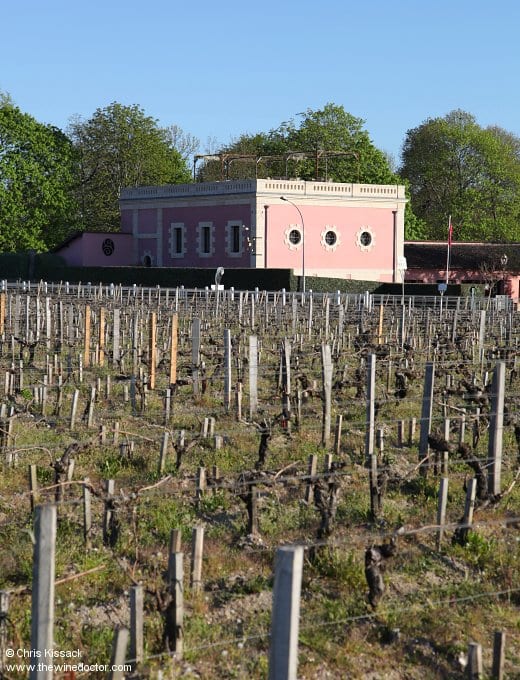
The Siran Vineyard

SiranThe vineyard amounts to 25 hectares, which is mostly accounted for by Cabernet Sauvignon and Merlot (48% and 38% respectively), with Petit Verdot on 14%. The vineyards have benefited from the installation of a drainage system finished in 1999. The fruit is harvested by hand, at yields below 45 hl/ha, with an initial sorting in the vineyard, before transport in small creates and a second sorting in the cellars. Although after 1995 the wines were made with advice from Michel Rolland, since 2003 it is Denis Dubourdieu that has consulted here. As might be expected, there is a temperature-regulated fermentation, followed by malolactic fermentation in oak barrels, which will typically by 40-50% new with each vintage. There is a selection made, with the grand vin Chateau Siran taking the better barrels, with about 15-30% going into the second wine which has been known, since the 1998 vintage, as S de Siran but which was previously known as Chateau Bellegarde. In addition, there are two other wines, firstly Bel Air de Siran, produced from 2 hectares of vines, 70% Cabernet Sauvignon and 30% Merlot, situated between Siran and Dauzac but entitled only to the Haut-Médoc appellation. The second is Chateau Saint-Jacques, a Bordeaux Supérieur, which is sourced from a further 15 hectares of vines on the Siran estate. The grand vin, Chateau Siran, is adorned with a label including a commission from an artist usually depicting the significant events of the year, à la mode Mouton-Rothschild.

What experience I have of Siran suggests that these are solid, rather dependable wines, reliable and structured although perhaps not showing the flare, poise or panache of grander names. The 2001 I recently found to be very easy drinking with some promise for the cellar, and I suspect - from tasting the second wine - that the 2005 would offer the same sort of experience. The 2004 and 2007 were perhaps less enthralling, but this is perhaps unsurprising when taken within the context of the vintages, at least with the latter of these two years. (24/4/08)

Contact details:
Address: 33460 Labarde
Telephone: +33 (0) 5 57 88 34 04
Fax +33 (0) 5 57 88 70 05
Internet: www.chateausiran.com

Chateau Siran - Tasting Notes

Click to locate stockists.

2009

Chateau Siran (Margaux) 2009: The blend here is Cabernet Sauvignon 45%, Merlot 48%, Petit Verdot 7%. Big, sweet fruit on the nose here, all damson jam and alcohol-macerated cherry, perhaps not a surprise when you look at the percentage of Merlot here. The same big creamy character on the palate, firm tannins (and an awful lot of them) and moderate texture. Decent acidity, but overall rather a robust style. From my 2009 Bordeaux primeur assessment. 15-16+/20 (March 2010)

2007

Chateau Siran (Margaux) 2007: Nice pretty fruit on the nose here, in the black spectrum, with notes of vanilla. A fresh, clean and very open style. On the palate it is soft and supple, with a rather loose-knit character. There are soft black fruits here, mirroring the nose, although overall the wine lacks precision. Certainly approachable though. From a tasting of 2007 Bordeaux at two years of age. 13.5+/20 (October 2009)

Chateau Siran (Margaux) 2007: Lots of new oak on the nose here, which I find rather surprising. Nice fruit as well though. The palate shows a good texture on entry, but it is immediately followed by chewy tannins, trying unsuccessfully to hide under the soft flesh of the wine. A touch rustic. From my Bordeaux 2007 primeur assessment. 13.5-14.5+/20 (April 2008)

2005

S de Siran (Margaux) 2005: Some really nice fruit here, open and fresh style, rather light but certainly vibrant. Quite simple and direct on the palate. There is texture and a good definition, but no great weight or impact. But it has flavour and presence, and a nice grip. For a second wine, this is a good effort, reflecting the success of the vintage. Drink now. 15/20 (November 2007)

2004

Chateau Siran (Margaux) 2004: There is direct, vibrantly styled fruit present in a lively fashion on the nose. It has a rather lean composition on the palate, rather firm with apparent acidity, with a straight forward texture that does little to impress. It has a nice flavour though, and it holds together well on the finish, where it shows a little more flesh. Rather light on grip. Overall, being generous, quite good. From a Bordeaux 2004 tasting. 14.5+/20 (November 2007)

2001

Chateau Siran (Margaux) 2001: There is a slight volatility on the nose here, and some dried cherry fruit. On the palate it has nice flesh and weight, not really open or evocative in terms of flavour, rather a relaxed style although there is some decent grip to it. Builds a little towards the end, and has a good, fleshy finish. I like this better than the 2004, tasted alongside. 16+/20 (November 2007)