Home > Producer Profiles > Bordeaux Profiles > Chateau Lamothe-Guignard
Chateau Lamothe-Guignard
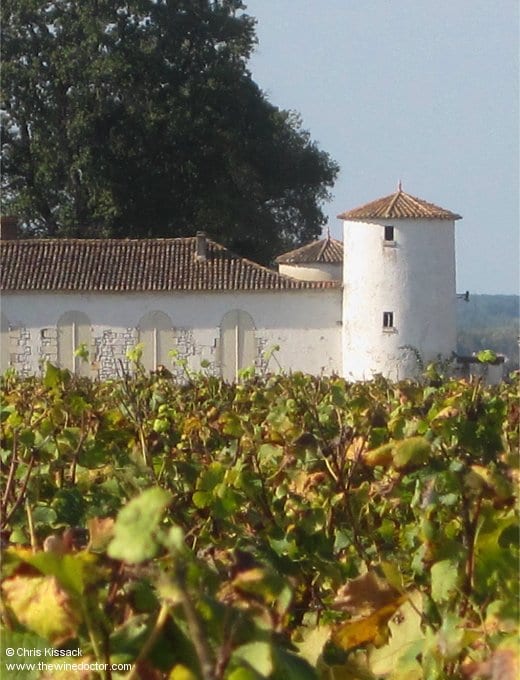
Like many Bordeaux estates, such as the Léovilles and the Pichons, Chateau Lamothe-Guignard was originally part of a much larger property. The original Chateau Lamothe dates back to an 8th Century fortress which occupied that site, remnants of which remain to this day; Lamothe (sometimes referred to as Lamothe-Despujols) now exists as a small, deuxième cru in its own right, but what is now Chateau Lamothe-Guignard was once a portion of this estate, cleaved off in the 19th Century.
The
break up off the estate occurred under the tenure of the Baptiste family, who
were in charge throughout much of the 19th Century, including the time of the
classification of the original Chateau Lamothe as a deuxième cru
in 1855. Those vineyards which were destined to become Lamothe-Guignard were
inherited by the next generation of the Baptiste family, before being sold on to
Charles Joseph Bergey. As was common practice, in order to distinguish one
estate from another, the Bergey name was appended to the chateau name and so
Chateau Lamothe-Bergey was created. Upon Bergey's death it passed to his
daughter Marie-Angele Tissot, and upon her passing it was purchased, in 1958, by
none other than Armand Bastit Saint-Martin. Bastit Saint-Martin had already
acquired the original Lamothe estate, and so here was a perfect opportunity for
the two to be reunited. This was a fabulous concept; imagine such a reunion
today of Léoville-Barton, -Poyferré and -Las Cases. But it was not to
be; instead, Lamothe-Bergey was leased out, and the two halves of the original
property continued to be run as two quite separate units.
With time the Bastit Saint-Martin family sold off their assets, selling the original Lamothe portion to the Despujols family, who continue to run the estate today, in 1961, and the Bergey portion to the Guignard family, in 1981; hence the name of the property was changed to Lamothe-Guignard. The Guignard brothers Pierre and Jean already owned a number of successful properties around Sauternes and Graves, and Jean's sons, Philippe and Jacques, were keen to take on an estate of their own. This somewhat rundown section of the old Chateau Lamothe was just such an opportunity. Over the ensuing years they replanted the vineyards and restored the chai, which was dilapidated; during the tenure of Bastit Saint-Martin the fruit harvested here had been fermented at another of his properties, Chateau d'Arche. As a result quality has rocketed, and Lamothe-Guignard now offers, in my opinion, good quality wines at a favourable price.
There are 17 hectares of vineyards here, occupying two distinct regions around the chateau, some on limestone and clay slopes descending to the Ciron, planted at 5500 vines/ha, and a gravelly plateau overlooking the town of Sauternes, planted at 6000 vines/ha. The vineyards, overseen by Jacques Guignard, comprise 90% Semillon with 5% each of Sauvignon Blanc and Muscadelle, and average vine age is now over 40 years. The harvest, obviously occurring in several tries, brings fruit to the chai where they are pressed hydraulically before fermentation in stainless steel or en barrique. Much depends on the characteristics of the vintage. Fermentations may end spontaneously, but Jacques Guignard, who looks after things in the winery, are comfortable with the addition of sulphur dioxide if they deem it necessary. The wine then sees up to fifteen months in oak, 25% new each vintage.
As I have mentioned above, the Guignards have brought about a dramatic improvement in quality at Lamothe-Guignard. My main experience of the Guignard wines has been with the 1988/89/90 trio, which offer fine quality and can still be found at a good price from time to time, even now the wines are mature or at least approaching maturity. Buying younger vintages is an even better deal; I recently secured a small quantity of the 2001 - in addition to that already held in my own cellar - for a dinner at a Royal College at a super price. Although clearly very youthful, the wine went down a storm. The following tasting notes are all of wines pulled from my cellar. (9/5/06)
Contact details:
Address: 33210 Sauternes
Telephone: +33 (0) 5 56 76 60 28
Fax +33 (0) 5 56 76 69 05
Chateau Lamothe-Guignard - Tasting Notes
Chateau Lamothe-Guignard (Sauternes)
2007: A touch of smokiness here, rather mineral, although with a little
touch of rubber too. Broad and clean style, very fresh and a touch delicate.
Nice citrussy, lemony flavour. Fleshy and sweet on the palate, fresh and lively,
with a little vigour. Nice concentration, but not very dense. Good.
From my 2007 Bordeaux
en primeur assessment. 15.5-16.5+/20
![]()
Chateau Lamothe-Guignard (Sauternes) 2001: The first tasting from a mix of halves
and bottles that I purchased, so I guess I'll have plenty of tasting notes for
this over the coming years. Lovely rich golden hue. The nose simply drips with
botrytis at first, before taking on a slightly more ethereal note as the nose
opens out, the melding of barley sugar, caramel and quince cut through by a
mineral freshness. Fine, flavoursome entry, moderate acidity, and a full, creamy
texture. Great presence through to the finish which has a rich, honeyed
character. Delightful. Quite simple at present, although with no lack of
character. Should do very well in the cellar. From a
Sauternes 2001 assessment.
18+/20 (May 2006)
![]()
Chateau Lamothe-Guignard (Sauternes) 1990: A half bottle. A deep
golden-orange-amber colour. Quite substantial volatile acidity on the nose, with
notes of sweet baked oranges and smoky, concentrated botrytis characteristics.
Full, sweet, concentrated, baked flavour. It is rich and expansive, with quite
grippy structure, intense burnt barley sugar, coffee, cigars even, and a
volatility which does blow off with some time. It has a degree of bitter
freshness, but is struggling to cover a fairly low acidity. Nevertheless, it is
good, and may yet improve. 16.5+/20 (May 2006)
![]()
Chateau Lamothe-Guignard (Sauternes) 1989: From a half bottle. Rich,
golden hue. Somewhat high-toned and acetone-laced on the nose, with plenty of
quince jelly character, spiced with barley sugar and white pepper. Rich, weight,
but finely balanced. Just a touch lean on the midpalate, and showing a bitter,
quinine-like edge thereafter. Lovely style in truth, and although not as opulent
as the 1990, I prefer this for the acidity it has, and the freshness it offers
as a result. Very good, for current drinking. 17/20 (May 2006)
![]()
Chateau Lamothe-Guignard (Sauternes) 1988: From a half bottle. A rich,
deep golden hue. The nose is deep and evocative, with plenty of sweet honey,
orange marmalade and even toffee aromas, with a baked, earthy sense beneath.
There is a subtly bright trace of volatility too. A rich and creamy palate, with
more organic, baked flavours. Beneath there is a little grip, although rather
low acidity. It gives a lot of pleasure though. This bottle isn't showing the
same delicate complexity as the last one, and is rather similar to the one prior
to that, with its rich, botrytised character. It illustrates very well the issue
of bottle variation with mature wines. 17/20 (May 2007)
![]()
Chateau Lamothe-Guignard (Sauternes) 1988: From a half bottle. A pale,
golden hue; picked at random from a case where one or two bottles have a
slightly deeper colour. Very, very mineral on the nose; orange and
honeycomb-coated crushed rocks with ethereal notes of white flowers, nettles and
mint. Delightfully clean style on the palate, which has elegance and richness
combined. It's lithe and balanced, with pineapple and orange blossom, and a new
flourish of minerality on the finish. Seamlessly put together. Very fine.
18.5/20 (May 2006)
![]()
Chateau Lamothe-Guignard (Sauternes) 1988: The first from my case of
halves, I noticed a slight colour variation in some bottles. I chose this, one
of the slightly more deeply coloured wines. From a half bottle. Rich, golden
hue. Good noble rot on the nose, with quince and orange notes. Very good palate,
balanced, fresh, but maturing and with plenty of rot character. Smoky pineapple,
good texture, with a ripe, full finish. Very good. May yet improve, but drinking
well now to my taste. 17+/20 (April 2005)
![]()
Home - Site index - Site updated July 25, 2008 - © The Winedoctor 2000 - 2008 - Wine Scores - RSS