Home > Producer Profiles > Bordeaux Profiles > Chateau La Mission Haut-Brion
Chateau La Mission Haut-Brion
The Haut-Brions of this world are certainly confusing; Haut-Brion itself, La Tour Haut Brion, La Mission Haut-Brion, Laville Haut-Brion, Carmes Haut-Brion and Larrivet Haut-Brion. They make for a confabulated litany of misunderstanding, but it is possible to see through the mist. The latter two are lesser properties, unclassified in 1959 (although that surely needs reassessment), and are topographically distinct from the first four, which are the first growth and pseudo-first growths of the Pessac-Léognan appellation, all located in the Bordeaux suburbs. The big two are Haut Brion and La Mission Haut-Brion, estates which face each other across a suburban street. It is tempting to think they are even more closely related, that they are siblings in some way, with some shared origin perhaps. Maybe they are the result of dividing up an ancient vineyard, as we have seen with the Léovilles, the Pichons and others?
No
such record of any division exists, and La Mission Haut-Brion has,
as far as we can tell, always been a discrete and individual neighbour to
Haut-Brion across the road. Indeed, there does appear to be some evidence as to
the origins of La Mission Haut-Brion, evidence which shows it to be quite distinct from that of Jean de Pontac's property next-door. The story begins at the opening of the 16th
century
with Arrejedhuys, a plot of land in the ownership of the Roustaing family. With
the sale of this land in 1540 to a local merchant, Arnaut de Lestonnac, we have
the genesis of La Mission Haut-Brion. It is conceivable that this land was already planted with
vines, but it seems more likely that it was Arnaut that established the
vineyard, and thus it is he, more than anyone else, who should be credited with
the creation of La Mission Haut-Brion. Indeed, the Lestonnac family did much to establish the
property, and they held tenure here for more than a century. Arnaut went on to
marry Marie de Pontac, the sister of Jean de Pontac, proprietor at neighbouring
Haut-Brion, and the estate subsequently passed to the next generation Pierre,
and then in 1607 to Olive de Lestonnac, Pierre's grand-daughter. At this stage
the estate was set to leave their ownership, however, as Olive saw fit to
bequeath her estate to the Congregation of the Mission (which must surely
be the origin of this estate's name), otherwise known as Pères
Lazaristes or even Vincentians. This latter term relates to St Vincent de
Paul who is claimed to have founded this order of priests and brothers. The
transition was not a straightforward one, however, as Olive's descendants were
naturally reluctant to release what they perhaps saw as more rightfully theirs.
Nevertheless, in 1664 Catherine de Mullet, heir to the estate, relinquished her
hold and it passed into the hands of the Roman Catholic church.
La Mission and the Maréchal
Information provided by La Mission Haut-Brion informs us that the order was headed up by a Father Simon who appeared to have a zeal for the production of wine of quality as well as religion. With regard to the latter a small chapel, Notre Dame de la Mission, was constructed and subsequently consecrated in 1698. In the vineyard, an area of woodland was cleared and more vines planted, and the reputation of the wine, now known as La Mission Haut-Brion, spread far and wide. One of its greatest exponents was Louis François Armand de Vignerot du Plessis, otherwise known as the Maréchal and Duc de Richelieu, a nobleman who held many honours and titles, one of which was Governor of Guyenne from 1755. It was through this role that he discovered the wines of Bordeaux which appear to have met with his approval, as he introduced them to the court in Paris. He reputedly took a particular shine to the wine from La Mission Haut-Brion, as did his successor Maréchal Duc de Mouchy. And with their connections, it is perhaps no surprise that the wine found its way onto the table at the residence of Audibert de Lussan, who was archbishop of Bordeaux between 1745 and 1769. Others with the necessary wealth could also enjoy the wine, however, as it was sold on the open market along with the other wines of Bordeaux, and not reserved for only religious palates.
Those with even a passing knowledge of French history will be anticipating the next chapter in La Mission Haut-Brion's history. As with all ecclesiastical institutions and establishments it all came to an end with the Revolution in the latter years of the 18th century. Confiscated by the new state and sold off, the buyer being Martial Victor Vaillant who acquired it all, including 15 hectares of vines, in 1792. There followed a brief interlude in the history of the estate, and a new chapter does not open until 1821, when La Mission Haut-Brion was purchased by the Chiapella family, of American origin. Hailing from New Orleans, Célestin Chiapella came to Bordeaux accompanied by his father. The family were already heavily involved in the wine trade, managing a number of estates, including Cos d'Estournel, when they acquired La Mission Haut-Brion at auction, the asking price being 91000 Francs. The Chiapella family held sole tenure at the estate for about four decades, although there seems to have been little in the way of advances in the vineyard. The reputation of the property also seems to have slipped a little during this era; previously highly ranked, the sequence of classifications that appeared in the 19th century show the property sitting behind Pape-Clément, and it seems that the most prominent testament to the Chiapella era today is a grand cast-iron gateway which graces the estate. In 1867 Jérôme Chiapella, Célestin's son, took control, joined by his daughter and son-in-law nine years later. In 1884 they sold out to the Etablissements Duval, before passing through the hands of Schröder and de Constans, the Cruse family and then Victor Cousteau. This latter individual, who also owned La Tour Haut Brion, passed the property on his retirement to Frédéric Woltner in 1919, thus opening the way for new investment and updating of the property; this was the start of La Mission Haut-Brion's modern era.

Modern La Mission
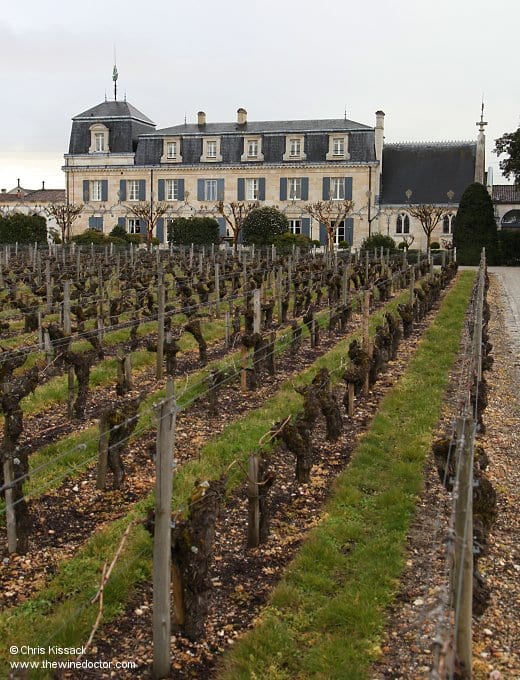
Frédéric Woltner had a challenge before him, but was fortunate to have the support of Fernand and particularly Henri, his two sons, who were eager to help. Together they installed new vitrified-steel vinification vats, commonplace technology today but this was a radical move for the time, facilitating control of the fermentation temperature and this improving greatly the quality of the wine. In 1933 Henri took control from his father, and with the passing of this generation the next took control, and perhaps the most notable of these was Francis Dewavrin, who was married to one of the Woltner heiresses. Although his efforts were considerable there was the perhaps inevitable internal struggle, and the situation was only resolved by the sale of the estate. And so, in 1983, the property was acquired by Clarence Dillon, who already owned Haut-Brion. In the years since this transfer of control, Dillon and his manager Jean-Bernard Delmas, subsequently succeeded by his son Jean-Philippe Delmas, have continued to consolidate La Mission Haut-Brion's position in the very upper echelons of all Bordeaux chateaux. Unsurprisingly there has been considerable refurbishment and renewal, with a renovation of the chai completed in 1987 and the installation of new equipment thereafter, and a new bottling line in 1996. And with an eye to the aesthetics of the domaine, the Chiapella gate has been restored, and the chateau, originally erected in 1713, has received the necessary attention. The work culminated with the construction of a new tasting room and cellars, at the cost of €5million, designed by architect Guy Tropprés who had already proved himself with work at Yquem, Cheval-Blanc and Vieux Chateau Certan. The new construction, which opened in 2007, replaced the three smaller cellars previously used, providing a storage area for two vintages of red wine as well as white wine, and also a new tasting room. During the work the wines of La Mission Haut-Brion had been stored at Haut-Brion, and the opening of the new cellars allowed these barrels to return to their rightful home.
La Mission Haut-Brion: the Vines and the Wines
The vineyards of La Mission Haut-Brion occupy a gravel croupe over chalk in the most northerly part of the Graves commune, across the road from the vines of Haut-Brion, and surrounded by the suburban streets of Bordeaux. There are nearly 21 hectares all told in two portions, the first situated in Pessac and the second in Talence, these two sections divided by the railway line between Bordeaux and Arcachon, a popular resort on the Atlantic coast. There is a slight incongruity on the composition of the vineyard between sources, differing only by one or two percentage points, but Turid Hoed Alcaras, who leads PR at Domaines Clarence Dillon, informed me that it is 45% Merlot, 46% Cabernet Sauvignon and 8% Cabernet Franc. The vines have a surprisingly young age, approximately 20 years, and are planted at a density of 10000 vines/ha. They are grafted onto four rootstocks, these being 420 A, 3309, Riparia and 101.14, and they are pruned in the traditional double Guyot method used throughout Bordeaux. The harvest is naturally gathered by hand, with sorting beginning in the vineyard where truck-mounted sorting tables are positioned. Fermentation is in the aforementioned stainless steel vats, which hold 180 hectolitres, with the temperature regulated to 30°C, and the whole process under the control of a dedicated computer system. Once the fermentation is finished the wine is transferred into oak, using 100% new wood, where the wine rests typically for 22 months, before an egg white fining and bottling, without filtration.
The
grand vin is Chateau La Mission Haut-Brion and of this there are typically 8000 cases
per annum. The wine of Chateau La Tour Haut Brion has been, by many
people and for many years, erroneously regarded as the second wine of La Mission
Haut-Brion. In fact La Tour Haut Brion was a distinctly separate property also once owned by
Victor Cousteau that came to the Woltner family in 1933, after the death first
of Victor in 1923 and then his widow, Marie, ten years later. The Woltner
brothers had been managing the property on behalf of Marie Cousteau for ten
years after Victor's death, and so it is perhaps not surprising that she
bequeathed the property to them. The wines were sourced from a 4.9
hectare vineyard and should always have been regarded, in my opinion, as a
separate cru. From the 2005 vintage, however, this erroneous belief has,
in part, been made true. From this vintage onwards, the wine that would once
have been La Tour Haut Brion will be utilised
in the production of the true second wine of La Mission Haut-Brion, which is
La Chapelle de La Mission Haut-Brion (in view of that decision, rather than
writing a retrospective profile on a now defunct name, I have included notes on
older vintages of La Tour Haut-Brion with my notes below). Always sourced from the young vines on the estate, and up to this
point usually amounting to about 1000 cases, La Chapelle de La Mission
Haut-Brion is now bolstered by fruit from more mature vines. In future
vintages, it is conceivable that the fruit of the La Tour vines may even be used
in the La Mission grand vin.
When one is reviewing a chateau with such an illustrious history - there are not many estates in Bordeaux that can provide such a detailed account of its history - it is tempting to look back over the many centuries of wine production and also review them. It is also inevitable that when we have two neighbouring properties with so much in common - the terroir, the proprietor, even the name - that there will be comparisons between the two. Of course, the latter issue is quite simple to address; when reviewing vintage pairs of such closely matched properties, there are bound to be some vintages where one wine prevails, others where it does not. And when reviewing ancient vintages, individual bottles may themselves show marked differences. When examining past vintages, opinions differ, as I would hope. There is nothing so dull as uniform agreement! La Mission Haut-Brion certainly has a reputation for producing a very burly wine, perhaps the most deeply coloured and structured of the appellation in some vintages, a style that can take many years to reveal its true charms. With the Dillon-Delmas era it seems that there has been tangible improvement, and it is from this era that I have experience of the wines. My own opinion is that this is certainly one of the leading estates of the appellation, offering many wines which combine style, presence but also rich substance. La Mission is a favourite of many wine critics and other wine professionals, and they that express this opinion have made, in my opinion, a sound decision. (26/2/08)
Contact details:
Address: Chateau La Mission Haut-Brion, Route de Cadaujac, 33850 Léognan
Telephone: +33 (0) 5 56 64 75 11
Fax +33 (0) 5 56 64 53 60
Internet:
www.haut-brion.com
Chateau La Mission Haut-Brion - Tasting Notes
As its vines have been utilised for the production of La Chapelle de La
Mission Haut-Brion since 2005, I have included notes on older vintages of La
Tour Haut-Brion with my reviews below, although prior to 2005, as I indicate in
my profile above, the estate was managed as a separate entity and was not
a La Mission second wine. Click
to locate stockists.
Chateau La Mission Haut-Brion (Pessac-Léognan) 2008:
This is 43% Merlot, 51% Cabernet
Sauvignon and 6% Cabernet Franc. Just 5300 cases, with just 40% making the grade
for the grand vin, the rest either going into La Chapelle or, in the case of
20%, being sold off. Chalky fruit on the nose, with a fine and perfumed
character. There is a fairly dense composition on the palate, with a fine linear
grip. Quite full, firm, with powerful tannins, but also with lots of texture and
substance too. It shows huge tannins at the finish, but also a fine perfume. A
true vin de garde. From my 2008 Bordeaux
primeur assessment. 17.5-18.5+/20 (April 2009)
![]()
La Chapelle de La Mission Haut-Brion (Pessac-Léognan) 2008: The second wine of
La
Mission Haut-Brion. Stony-smoky fruit on the nose, although it is
fairly withdrawn. It has a richer and more creamy entry than Le Clarence, and
this carries on through the midpalate. Fine, rather silky tannins even at this
level, and a wealth of rich, dark, slightly chewy fruit. Good substance here.
From my 2008 Bordeaux
primeur assessment. 16-17+/20 (April 2009)
![]()
Chateau La Mission Haut-Brion (Pessac-Léognan) 2007: The grand vin accounts for 36%
of the harvest in this vintage, and there will be 4500 cases of the 2007
produced. There is more Cabernet here, 48% Sauvignon and 9% Franc, with 43%
Merlot. It is tighter than La Chapelle, less expressive on the nose, showing
just a little toastiness. It is full and broad, structured but elegant, perhaps
rather leaner than I hoped. It has a nice character though, although there is an
obvious extraction of tannins here. A wine of good potential, but not a great La
Mission. From my 2007 Bordeaux
primeur assessment. 15.5-16.5+/20 (April 2008)
![]()
La Chapelle de La Mission Haut-Brion (Pessac-Léognan) 2007:
There is a sweet density of fruit
on the nose, red-black in character, the blend dominated by Merlot which
accounts for 64%, with 30% Cabernet Sauvignon and 6% Cabernet Franc. Selection
has been strict, with just 28% of the harvest in this wine (so much rejected
completely), nevertheless it seems somewhat diffuse and has a rather savage note
to it. Nevertheless, a stylish entry, balanced and showing finesse, before a
firmer structure becoming apparent in the midpalate. Sweet fruit on the finish,
which is firm, showing a lot of ripe tannins. Not much length. Good. From my 2007 Bordeaux
primeur assessment. 14.5-15.5+/20 (April 2008)
![]()
Chateau La Mission Haut-Brion (Pessac-Léognan) 2005: A wonderful nose here; this
has an extra dimension compared to many of its peers. There is perfumed fruit,
highly aromatic but still dark and mysterious. Violets and rose petals are
blended in with elements of fresh stock, tar and tobacco. How enticing! The
palate seems very restrained considering the wine's exuberant character on the
nose, showing a much lighter presence of perfume, but more importantly it shows
a very elegant composition, a well defined, seamless, polished presence, bright
and fresh, vigorous and yet elegant. There is structure here, a core of ripe
tannin, bright acids, and this is certainly a banker for the long-haul. A superb
wine indeed. From my tasting of
2005 Bordeaux
at four years of age. 19+/20 (November 2009)
![]()
La Chapelle de La Mission Haut-Brion (Pessac-Léognan) 2005: CS 94%, CF
6%. A glossy appearance, right out to the rim of raspberry red. A delightful
nose, vibrant with blackcurrant and blackberry fruit, then traces of raspberry
and toffee, notes of buttery oak, smoke and liquorice. Very pure and expressive
in character. Clean, light on entry, elegant, but then quite broad and stylish
on the midpalate. Appealing, composed and harmonious, quite concentrated though,
with a nice grippy depth, with some fine tannins layered beneath it all. Very
impressive second wine. 16.5-17+/20 (November 2007)
![]()
Chateau La Tour Haut-Brion 2005: A swan-song for La Tour Haut-Brion -
the final vintage. A
more masculine nose than La Mission. Darker, deeper, more restrained.
Nevertheless this wine also has some of those fine beef stock and tobacco notes,
although more hidden than with La Mission. And on the palate too, this is a less
generous and less flattering style than La Mission. It is polished and firm,
slightly stony in character, without the warm flesh of some other wines. A wave
of black pepper at the finish. There are more bones visible here, and
correspondingly less flesh. There is certainly an elegance to it though, and it
is unquestionably of high quality. From my tasting of
2005 Bordeaux
at four years of age. 17.5+/20 (November 2009)
![]()
Chateau
La Mission Haut-Brion (Pessac-Léognan) 2004: This has a greater density of meaty fruit on
the nose, although it still has a bright and enticing character. The palate
starts off gently, showing a good ripe grip and a ripe, supple, fleshy and
balanced texture. There is a lovely harmony of fruit, with elements of meat stock
and spices, and a deep and savoury character, wrapped up in a fleshy texture.
This has fine tannins, great density, and is just brimming with potential. From
my assessment of 2004
Bordeaux at four years. 18+/20 (November 2008)
![]()
Chateau La Mission Haut-Brion (Pessac-Léognan) 2004: CS 42%, M 55%, CF 3%.
This wine has a dark core, it certainly isn't opaque though, and there is an
attractive raspberry pink rim. There is still some oak on the nose here, lending
the wine a buttery character. But there is also some fine, ripe, succulent
fruit, hiding behind the oak at the moment, although it shows a little better
with time in the glass. Firm yet rounded, structured and rather tight in its
youthfulness. Grippy, slightly dusty tannins; there is a lot of structure. Fine
ripe fruit. There is great potential here. 17.5-18+/20 (November 2007)
![]()
La Chapelle de La Mission Haut-Brion (Pessac-Léognan) 2004: CS 94%, CF
6%. A denser hue, less vibrant than the very young 2005 La Chapelle, tasted
alongside. The nose here holds some pleasure, with a platter of red cherries
seasoned with a little mint, but with a gravelly character and even a little
honey edge to the fruit - perhaps a little residual oak? Firm and structured on
the palate, with quite some depth on the midpalate, where it shows a firm,
grippy core of tannins hidden underneath. Rather more austere than the 2005.
Very complete and masculine in style. 16.5+/20 (November 2007)
![]()
Chateau
La Tour Haut-Brion 2004: Today this is part of the
La Mission Haut-Brion stable. This is vibrant, high-toned and lively on the nose,
with raspberry fruit complicated by elements of furniture polish, liquorice and
violets. Elegant and harmonious on the palate at first, showing a little more
midpalate texture imbued with traces of caramel and vanilla from the oak. Softly
spiced with tobacco, there is a good substance, backed up by peppery tannins and
good acidity. At the moment it all seems very broad and unintegrated but given
time I think it will come good. From my assessment of 2004
Bordeaux at four years. 17+/20 (November 2008)
![]()
Chateau La Mission Haut-Brion (Pessac-Léognan) 2003: CS 52%, M39%, CF 9%. A very dense colour, with a good
concentration right out to the rim. The nose is rather typical for the vintage,
showing a confit cherry pie character. The palate is huge and rounded,
full of cherry fruit, but with a great deal of tannin. But there is some good
acidity too, something frequently diminished in this warmest of vintages.
Slightly feral. Lots of grip on the finish, which is infused with tannin. But
there is lots of fruit too. Impressive for the vintage. 16.5-17+/20 (November 2007)
![]()
Chateau La Mission Haut-Brion (Pessac-Léognan) 2001: CS 35%, M 62%, CF
3%. A deepening colour here, with a dusky pink rim. This has a rather light and
dusty nose, with some cherry notes, but it is not very open or talkative today.
Rounded, showing a lot of structure on the palate, and not a lot of flesh. Well
composed, grippy, with flavour, substance and texture on the finish. There is
potential here; with time, I think this could be very good indeed. 16.5-17+/20 (November 2007)
![]()
Chateau La Mission Haut-Brion (Pessac-Léognan) 1999: CS 42%, M 50%, CF
8%. Dark, not opaque, fading gently out towards the rim. It has an appealing
nose, with bright fruit, dark cherries, and fresh minerals. It is very pretty,
and certainly enticing. Fresh and clean on the palate, minerally, with bright
and crunchy fruit. There is some flesh, building on the midpalate, showing good
grip combined with good acidity. It all hangs together very nicely, and although
inferior to some other vintages tasted this will be approachable for drinking
with pleasure very soon I think. Delightful. 17+/20 (November 2007)
![]()
Chateau La Mission Haut-Brion (Pessac-Léognan) 1998: CS 35%, M 65%. A
dark core here, with a dusky pink rim. There is some development here, but on
the whole this still comes across as dense and youthful. It shows nicely
polished fruit with a feral, gravelly edge spiced with a little dark chocolate.
There is a richness on the palate, although there is a more gentle composition
and integration compared to the younger wines. An attractive and harmonious
style, this is coming together nicely. There is a little raw edge to it, and it
isn't entirely knit together, so this certainly isn't ready. But there is lovely
potential; I think this is an under-rated vintage for Graves, and it shows here.
Splendid. 18.5+/20 (November 2007)
![]()
Chateau La Mission Haut-Brion (Pessac-Léognan) 1997: An advanced,
red-brick hue. Dense, dark fruits on the nose, but also a slightly
dirty, unclean note. A nicely balanced palate, with good fruit, and
appropriate tannins. The palate seems fairly well put together despite
the disappointing nose. From a tasting of the
1997 Bordeaux vintage. 14.5+/20
(February 2003)
![]()
Chateau La Mission Haut-Brion (Pessac-Léognan) 1995: CS 47%, M 48%, CF
5%. A very dark core to this wine, deep and dusky, with a red-pink hue. With
maturity comes greater Graves typicity, especially in comparison to the younger
wines tasted alongside this. It has a strong, minerally, gravelly component,
with a prominent organic, seashell character laced with a little creamy toffee.
Very direct and balanced, with an appealing, lean, minerally character. Very
elegant, complete, showing a little flesh but overall it is detached and
stylish. Still plenty of potential for development here though. 18+/20 (November 2007)
![]()
Chateau La Tour Haut-Brion (Pessac-Léognan) 1995: Today this is part
of the La Mission Haut-Brion stable. A great and very dark
colour in he decanter, and a fabulous nose too; it has beef and blood, rusty
iron filings, with crispy tobacco leaf, green peppercorn, mint and dried tea
leaves. It all seems very lifted and fresh, rather than anything over the top. A
great presence in the mouth, very cool and unforced, certainly not a block
buster, but there is plenty of richness here, in terms of flavour and structure.
There is a ripe seam of grainy-velvety tannins, and a stony texture although
with little glimmers of light cream here and there, with all the complex
elements found on the nose coming through. Gently subsiding finish, linear,
elegant and composed, yet with substance. It is perhaps in need of a little more
texture and weight, but otherwise this is fine. I think this will keep going
well for the next ten years at least. From a
1995 Bordeaux tasting. 17.5+/20
(March 2010)
![]()
Chateau La Mission Haut-Brion (Pessac-Léognan) 1994: CS 43%, M 56%, CF
1%. Darkly coloured, a little maturity in the hue. The nose is immediately
really very beautiful; a very classic, evocative aroma of Graves. Delicate,
pretty and enchanting. On the palate, despite this wine's thirteen years, it
displays a beautiful, fresh, crisp character. A direct, delicious and lively
style, A lovely depth, with grip and substance combined. Delightful silky
texture. This is very fine. 18+/20 (November 2007)
![]()
Chateau La Mission Haut-Brion (Pessac-Léognan) 1993: CS 51%, M 56%, CF
1%. The colour here is holding up nicely, with a good depth. Slightly meaty on
the nose, with a gravelly, iron-bound hue. Very appealing palate, gently and
silky texture, but it fills out to show a more fleshy midpalate. Good flavour
and a light grip. This is really very, very good for the vintage. A rounded,
sweet and grippy finish. A surprising success, taken in context. 17+/20
(November 2007)
![]()