Home > Producer Profiles > Bordeaux Profiles > Chateau Doisy-Védrines

Chateau Doisy-Védrines

The three Doisy vineyards of Barsac - Daëne, Védrines and Dubroca - all stem from a single estate, the origins of which are not well described. The earliest records are from the 18th century and describe an estate to the south of Chateau Coutet owned by the Védrines family. The newlyweds Jean Védrines and Marie Raymond settled in a little village here named La Pinesse, which was owned by the Raymonds. Here they established an estate complete with chateau, and they or their immediate descendents are likely to have been responsible for the planting of vines. Within the same century they were expanding their domaine, acquiring a small portion of the Coutet vineyard when it was sold off, following the execution by guillotine of its owner, Gabriel-Barthélémy-Romain de Filhot, in 1794.

Chateau Doisy-VédrinesBy the early 19th century the estate was recognised as one of the leading vineyards of Barsac, along with Coutet and Climens, when it was recorded as such in André Jullien's Topographie de Tous les Vignobles Connus, although by this time it had changed hands, the new proprietors being the Dubosq family. Also about this time, although it is not clear exactly when, the vineyard was divided, as were so many of the great vineyards of Bordeaux were under the new Napoleonic laws. Of the three portions, two were considerably smaller than the third. The first of these two was acquired by the Faux family, this being the genesis of Doisy-Dubroca, perhaps the least known of the three Doisy estates that exist today. The second was purchased by Jean Jacques Emmanuel Daëne, a name said to be derived from the English Deane, this being the nascent Doisy-Daëne. The largest, however, remained with the original owners, the Védrines (or Dubosq) family, and it was this part that was the origin of what is today Doisy-Védrines. The Védrines family remained at the estate until the middle of the 19th century, until in 1851 they sold out to the Boireau family, and it has remained with their descendents through to modern day. It passed first to a Madame Teyssonneau who ran the estate well into her dotage, eventually bequeathing the estate at the age of 94. It came to her grandson, Pierre Castéja, who ran the estate during the remainder of the 20th century. With his passing Doisy-Védrines came to the next generation of the Castéja family, Olivier.

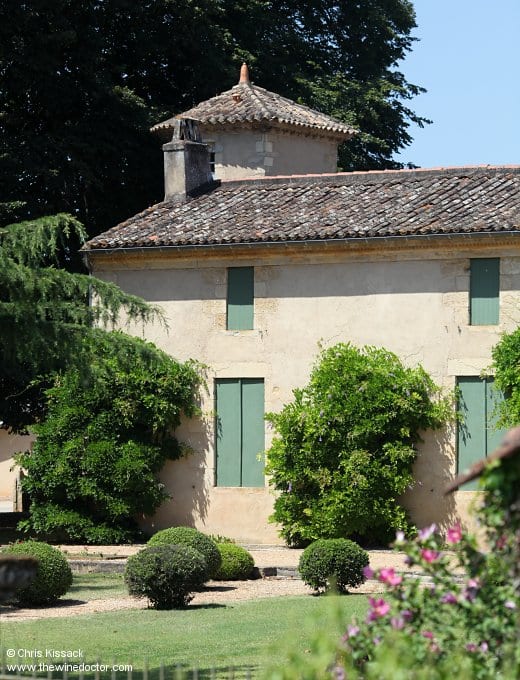
The Doisy-Védrines vineyard remains the largest of the three Doisy estate, with 30 hectares of vines with an average age of more than 30 years. They are situated on soils fairly typical of the region, dominated by the red soils of Barsac, a mix of argilo-limestone, sand and also some clay, over a limestone bedrock peppered with fossilised shellfish exactly as at Doisy-Daëne. It is a single block of vines, covering an area considerably less than that which was planted up in previous centuries, associated with a small farmhouse which displays a mix of architectural styles, the oldest part being a small round tower dating from the 16th century. The vineyard is dominated by Semillon, accounting for approximately 85%, the remainder being Sauvignon Blanc. Those Muscadelle vines that did have a place in the vineyard were uprooted many decades ago. As should be expected the harvest is manual, with a sequence of tries to select the berries most affected by botrytis, the fruit being transported to the chai where the fermentation is undertaken in thirteen stainless steel vats, with temperature control. Following completion the wine sees a fairly standard eighteen months in oak, 70% of which are new each vintage. The finished product is fined and filtered before bottling. The grand vin is Chateau Doisy-Védrines, and there is a second wine La Petite Védrines.

Inevitably the Doisy vineyards invite comparison, and although I have tasted one or two vintages of Doisy-Dubroca I have rather more experience with Doisy-Daëne and Doisy-Védrines. The latter two are today frequently of good quality and worth considering when looking at sweet wines for the cellar, although both may also be picked up at a good price when mature. Although quality is good they are of slightly different styles, with Doisy-Daëne perhaps a little more elegant than the Doisy-Védrines, although the latter has that vibrant Barsac acidity to counterbalance the richness of the style. On the one or two occasions where I have tasted them against one another, in the same vintage, I note that I have come down slightly in favour of Doisy-Védrines, but this would not be true for all tasters I am sure. Those that value a more ethereal style may well be better off with the Doisy-Daëne. (24/7/07)

Contact details:
Address: Chateau Doisy-Védrines, 33720 Barsac
Telephone: +33 (0) 5 56 27 15 13
Fax +33 (0) 5 56 27 26 76

Chateau Doisy-Védrines - Tasting Notes

Click to locate stockists.

2009

Chateau Doisy-Védrines (Barsac) 2009: Residual sugar 140 g/l. Bright and fresh, showing slightly cleaner lines than Doisy-Daëne, with a fabulous crystalline style. Fresh, layered and complex, building though the palate, becoming complex with more time. A beautiful character in the mouth, so lively and defined. A supreme effort in a great vintage. From my 2009 Bordeaux en primeur assessment. 18-19+/20 (March 2010)

2008

Chateau Doisy-Védrines (Barsac) 2008: Freshness here, with vanilla, honey and lemon on the nose. The palate shows a slightly fat sweetness, with a rather diffuse character. It doesn't show the defining Barsac acidity that I look for. Good grip to it though. From my 2008 Bordeaux en primeur assessment. 14-15+/20 (April 2009)

2007

Chateau Doisy-Védrines (Barsac) 2007: A wine that wowed a lot of tasters during the primeurs if I remember rightly. Wonderfully bright and fresh, with tangerines and lychees, lightly honeyed, with nuances of botrytis and oak. Pure and stylish, very impressive on the palate, substantially creamy. Bright and crystalline honey fruit, fat substance, and a wonderfully plump finish. The finished wine is just as fine as those primeur samples. From my tasting of 2007 Sauternes at two years of age. 17.5+/20 (October 2009)

Chateau Doisy-Védrines (Barsac) 2007: A lovely, creamy, flattering nose with the aromas of lemon meringue and delicious pastries. The palate is direct and well defined, but is very full. There is good botrytis here, creamy with honey, minerals pepper and more. This is a wine of substance, with a lovely composition, and plenty of good acidity underneath it all. This should be very fine indeed. From my 2007 Bordeaux en primeur assessment. 17-18+/20 (April 2008)

2006

Chateau Doisy-Védrines (Barsac) 2006: Elegant, fresh, citrusy fruit on the nose here, with floral elements, such as elderflower. A very stylish and fresh palate, with lots of sweet substance and lift, but also some grip beneath this. Fresh and vibrant acidity completes the picture. A stylish and attractive wine. From my tasting of 2006 Sauternes at two years of age. 16+/20 (October 2008)

Chateau Doisy-Védrines (Barsac) 2006: Fresh, open, delicate and really quite pretty. White fruits, vibrant flavour, rather low acidity, pleasing flavours, a little grip, clean and well presented. Could be an early-drinking crowd-pleaser. Not serious or rich in botrytis, but quite nice. From my 2006 Bordeaux assessment. 15-16/20 (April 2007)

2005

Chateau Doisy-Védrines (Barsac) 2005: A very bright and lively set of aromatics here, showing nice vanilla, honey and pineapple characteristics. Rich and creamy, with a rather soft and fleshy style, with acidity also on the low side. There is a little grip running beneath it all, and a rather candied pastille character to the fruit, nicely livened up with some good botrytis. Very good indeed. From my tasting of 2005 Bordeaux at two years of age. 17-17.5+/20 (October 2007)

2004

Chateau Doisy-Védrines (Barsac) 2004: A very expressive nose here, with some good botrytis character, and lots of honeyed, apricots and quince. Rich, fat and unctuous on the palate, with acidity on the low side again. Lacks a little balance and focus perhaps, but remains quite fresh despite this. Honeyed fruit, with great depth on the finish. Good wine, with potential. From my 2004 Bordeaux assessment. 16.5+/20 (October 2006)

2003

Chateau Doisy-Védrines (Barsac) 2003: Quite ethereal, white flower nose, with rich honey and barley sugar undertones. Good character on the palate, which has a very fresh style, although it carries worthy peach and other stone fruit flavour, with a fine honey sweetness. Lovely weight and presence. Very good. From my 2003 Bordeaux assessment. 18/20 (October 2005)