Home > Producer Profiles > Bordeaux Profiles > Chateau Beaumont

Chateau Beaumont

My first encounter with Chateau Beaumont was a vicarious one, when a companion at a claret tasting saw fit to extol the virtues of this Cru Bourgeois property, prompted by his having recently opened, and enjoyed immensely it seemed, the 1990 vintage. His purchase seemed a little akin to insider knowledge, as I must confess that at the time I was not very familiar with the estate. In more recent years I have had the good sense to better acquaint myself with this under-rated Haut-Médoc chateau, and have come to appreciate these wines for their classically styled lines and, of course, their good value.

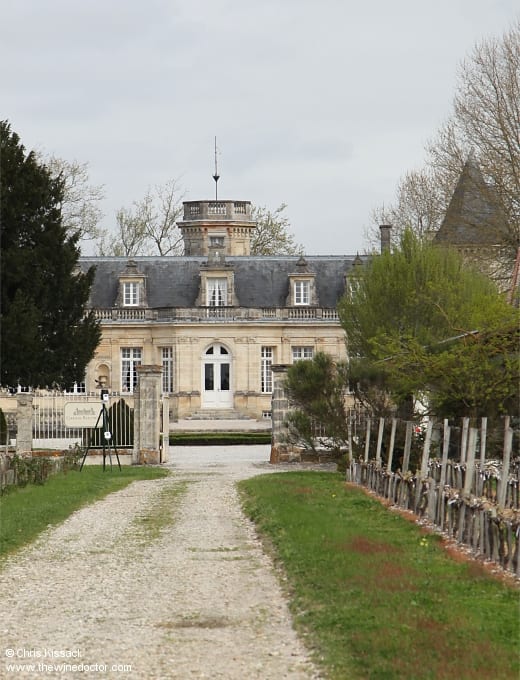
BeaumontThe origins of the estate are quite recent compared to many other Bordeaux properties; in the mid-18th Century the land belonged to the Duc de Duras, marshal of France, and was a mix of fallow arable land, pasture and moor-land. In 1772 it was purchased by Henri Labarthe, who set about clearing and draining the land in preparation for the establishment of a vineyard. Labarthe thus set the wheels of this Haut-Médoc estate in motion, but it was M Bonnin, who acquired the vineyard in 1824, that named it Beaumont. From him it passed to the Marquis d'Allègre in 1830, one of the richest men in all France. The chateau, an imposing three-storey affair constructed in the Mansard Renaissance style, characterised by the split slope of the roof and the dormer windows that adorn the lower slope, flanked in this case by rather exotic octagonal turrets, was erected in 1854 by the Bonnin brothers, who acquired the property from d'Allègre in 1849. The estate then passed through the hands of a number of distinctive individuals, starting with its purchase by the Comte de Gennes in 1860, Jean-Victor Herran, Minister for Honduras, in 1872, and then the French industrialist Joseph Germain, who acquired the property in 1890. Germain made some significant investment in the estate, expanding the vineyards to three times their original size, and he was also responsible for the construction of the chai in 1894. During the 20th Century the estate then passed from pillar to post, successive owners including the Della Grazia company of Milan, a Lieutenant Colonel Ignacio Andrade, and a retired Venezuelan senator by the name of Dionisio Ramon Bolivar Carvajal, a relation of the famed South American revolutionary Simon Bolivar, before coming into the hands of Bernard Soulas, who undertook an overdue refurbishment of the grand chateau.

The modern era for Beaumont began in 1986, with the acquisition of the property by the Société Grands Millésimes de France, a joint business venture created by Groupe GMF and Suntory, the latter already having had a presence in Bordeaux since 1983 as proprietors of first Lagrange, and the following year Beychevelle. The new owners found themselves in possession of 105 hectares of vineyard planted on well drained, deep and gravelly soils. The vineyard is dominated by Cabernet Sauvignon (60%), with 35% Merlot and the balance Cabernet Franc and Petit Verdot. The vines average 25 years of age and are planted at 6666 vines/ha. The harvested fruit is fermented in temperature-controlled stainless-steel vats with three weeks of maceration. The oak is one third new each vintage, the wine resting in barrel for up to fourteen months. Of the grand vin, Chateau Beaumont, there are about 40000 cases per annum, and a lesser amount of a second wine labelled as Chateau d'Avrigny.

As I allude in my opening paragraph, when looking for good value Bordeaux, I don't doubt that Beaumont should be on your shopping list. And in a great vintage such as 2000 or 2005, these wines make exceptionally good buys indeed. (15/2/07, updated 27/2/08)

Contact details:
Address: 33460 Cussac-Fort-Médoc
Telephone: +33 (0) 5 56 58 92 29
Fax: +33 (0) 5 56 58 90 94
Internet: www.chateau-beaumont.com

Chateau Beaumont - Tasting Notes

Click to locate stockists.

2008

Chateau Beaumont (Haut-Médoc) 2008: An interesting nose, fresh and perfumed, although the fruit is dominated by notes of rhubarb. It is more appealing than it sounds! Supple and perhaps slightly oily on the palate, this is nicely textured, with sensible extract and backbone of tannins. Good extract and firm grip. Overall rather straightforward, but at least it is fresh. From my 2008 Bordeaux primeur assessment. 15.5-16.5+/20 (April 2009)

2004

Chateau Beaumont (Haut-Médoc) 2004: A minerally nose here, showing red fruits with a slightly cooked feel to them. Lean on entry, a lightweight texture, with a soft and chalky character. It is a touch oily too. It seems a touch stretched out, although there is a little grit and substance to the fruit, and it still seems rather unfocused, as it did earlier this year. Nevertheless, this may come good with time in the cellar. From a 2004 Bordeaux tasting at four years of age. 15+?/20 (November 2008)

Chateau Beaumont (Haut-Médoc) 2004: There is some appealing fruit here, plump in style. On the palate it displays a rather straight tannic core, which is surrounded by a somewhat unfocused flesh. Underneath it all, lots of raw, tannic grip. This has good structure, with firm acids. It is rather unknit and awkward at present, but I suspect with integration in the cellar it will be much improved. 16+/20 (February 2008)

2002

Chateau Beaumont (Haut-Médoc) 2002: A charming colour here, a nice depth at the core, and a vibrant raspberry-pink rim. The nose has a similar vivacity, with plenty of crunchy fruit apparent, with a fresh and crisp raspberry, blueberry and blueberry character, all with a leafy streak. These fruit flavours are backed up by a smoky, charcoaly, cedary quality which gives some pleasure. Attractive but light in character, not showing much in the way of structure, and this should make for pleasant drinking in the short-term. 15+/20 (November 2007)

2001

Chateau Beaumont (Haut-Médoc) 2001: A second chance to taste this wine. The 2001 vintage has an attractive colour, and on the nose there is rather restrained fruit, and I suspect this is perhaps closing down a little today. Softly composed on the palate, with a nice tannic structure. This has good grip and overall an attractive style. With a little time it will make very good drinking. 16+/20 (February 2008)

Chateau Beaumont (Haut-Médoc) 2001: A dark, garnet core fading to a pink rim. Dark and meaty aromas, with a stony perfume of macerated black fruit. A little reserved, but nicely high toned and lifted. A good weight, with a rather attractive lean and stony core, but with lovely texture and extract wrapped around it. Blackcurrant flowers, over a firm tannic backbone. It has nice freshness, but rather a short finish. An attractive wine though. 16.5+/20 (January 2007)

2000

Chateau Beaumont (Haut-Médoc) 2000: Several of these bottles opened over a dinner, and they all performed very well indeed throughout the evening. I decanted the first for an hour or two but subsequent bottles were really showing well right from opening. Lots of crunchy blackcurrant and smoke on the nose, typically claretty. A lovely, supple structure on the palate, dark fruits with a gentle, stony texture underneath a little flesh. The composition is very pleasing, straightforward but quite faultless. Good, firm, mineral and iron presence. These bottles have never failed to deliver and have been great value too. I look forward to the remainder. A 2007 Christmas wine. 17/20 (January 2008)

Chateau Beaumont (Haut-Médoc) 2000: A dark, intense hue. Meaty, claretty, smoky and full of appeal. A touch less developed than the last bottle which is fine by me. Mineral, iron-edged character, and a full, concentrated, mouthfilling palate, which satisfies and yet also refreshes with an elegant poise and a beautifully styled structure. It has cellaring potential, but to my tastes is just fine now. Very good indeed, and great value. 17/20 (January 2007)

Chateau Beaumont (Haut-Médoc) 2000: The colour shows some maturity here, displaying rich, mahogany tones as it is poured into the decanter; there was no sediment of note, though. A lovely, quite classic nose, with meaty, iron filing notes with a little baked twist to the plentiful fruit, with some hot spices too. Full, a little creamy on the palate, but with fine extract, and ripe, succulent tannins which are integrating well. Nicely structured, moderate and balanced acidity, with good length. This is lovely, for drinking over the next 5-8 years. 17+/20 (March 2006)